Why delivery drones need permission: the basics of drone delivery regulation
Drone delivery regulation exists because autonomous aircraft flying over populated areas create risks that need to be managed: the risk of collision with manned aircraft, the risk of falling on people or property if the aircraft fails, and the risk of privacy intrusion or noise nuisance to the communities overflown. Regulation is not an obstacle to drone delivery — it is the framework that makes it possible to operate commercially, with community acceptance, at the scale needed to be economically viable.
The fundamental question: who is responsible?
Every commercial drone delivery operation requires a defined responsible party: an operator who holds an authorisation from the relevant aviation authority and who is accountable for the safety of every flight. This is the same principle that applies to airlines, helicopter operators, and general aviation pilots — the operator accepts regulatory accountability in exchange for the right to use the airspace.
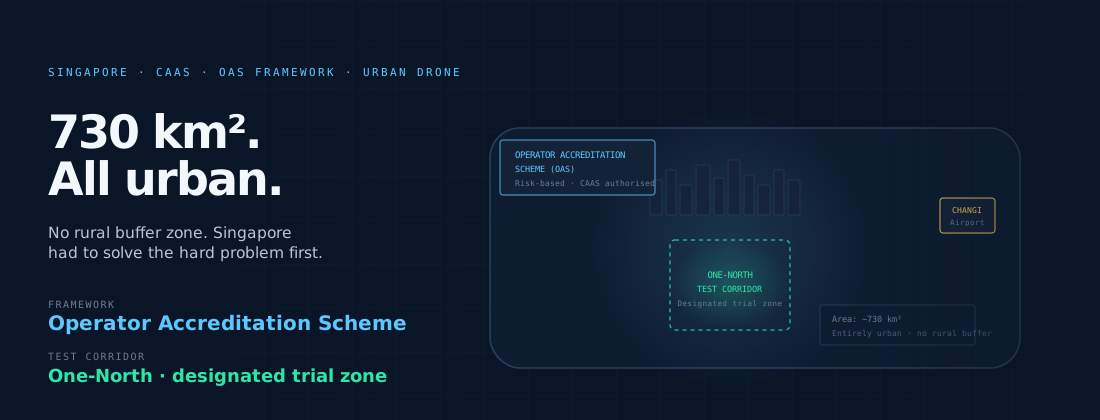
For drone delivery, the operator is typically the company that runs the delivery service: Wing, Zipline, Manna, Matternet, and others. They hold operational authorisations from the relevant national aviation authority — the FAA in the United States, the CAA in the UK, Traficom in Finland, CAAS in Singapore — and are responsible for training their remote pilots, maintaining their aircraft, and demonstrating to the authority that their operations can be conducted safely.
VLOS and BVLOS: the most important distinction
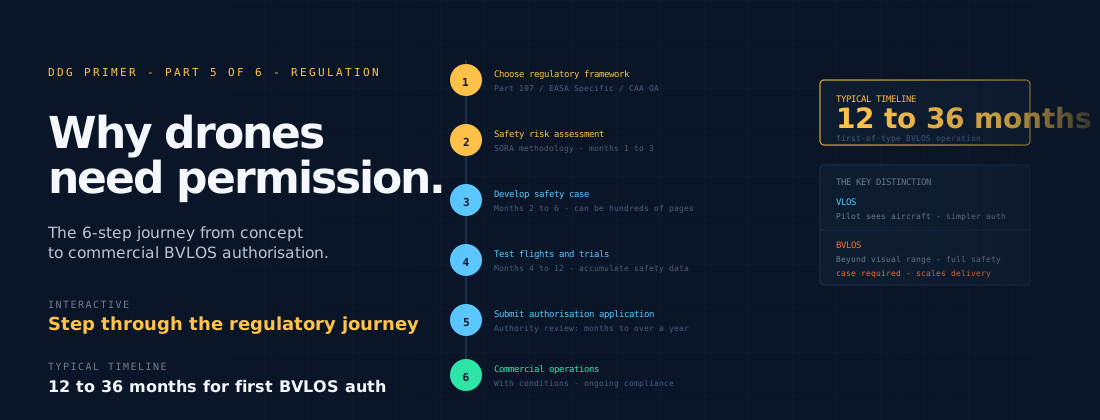
The most significant regulatory distinction in drone operations is between Visual Line of Sight and Beyond Visual Line of Sight operations. In VLOS operations, a qualified pilot maintains direct visual contact with the aircraft at all times and can intervene immediately if something goes wrong. In BVLOS operations, the aircraft is beyond the range of direct visual observation — it may be kilometres away from its ground control station.
VLOS operations are relatively straightforward to authorise: the pilot’s eyes are the primary safety mechanism, and the regulatory requirements focus on pilot competency and aircraft airworthiness. BVLOS operations require much more extensive safety cases: the operator must demonstrate that the aircraft’s autonomous systems, contingency procedures, and detect-and-avoid capabilities provide an equivalent level of safety to having a pilot watching the aircraft.
Commercial drone delivery at meaningful scale requires BVLOS operations. A hub serving hundreds of addresses cannot have a pilot watching each aircraft for every flight. The regulatory framework for BVLOS is therefore the central constraint on scaling commercial drone delivery operations.
How authorisation works in practice
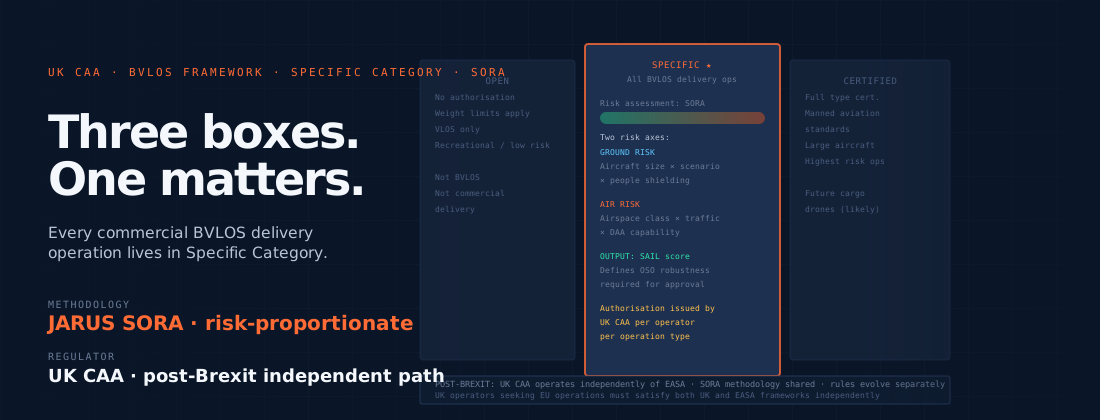
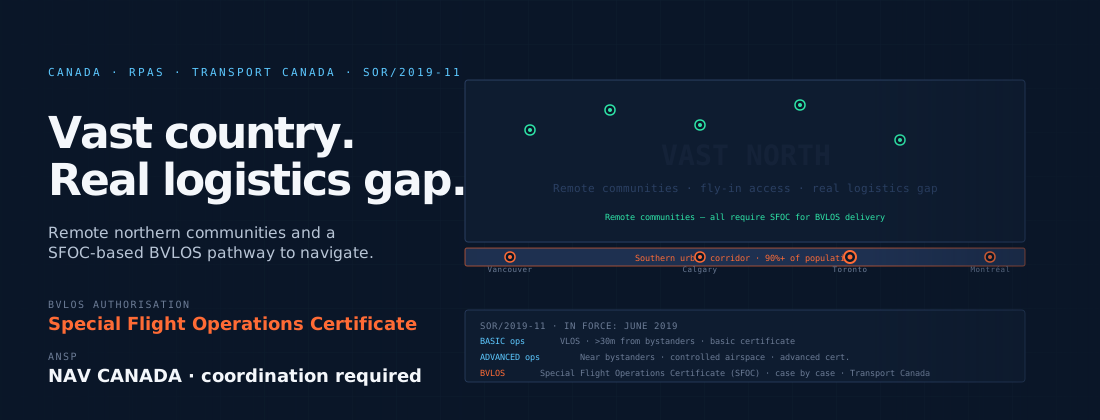
In most markets, BVLOS authorisation is granted on a case-by-case basis: the operator submits a detailed safety case describing their aircraft, their operational procedures, their maintenance systems, and their contingency plans. The aviation authority reviews the safety case, may conduct an inspection or require demonstration flights, and then grants an authorisation that is specific to the operator, the aircraft type, the operational area, and the type of operation.
This case-by-case approach allows authorities to manage risk carefully in the early stages of a new technology. Its limitation is that it does not scale: reviewing individual safety cases for each operator in each location is resource-intensive for both the operator and the authority, and it creates a barrier to the kind of rapid expansion that would allow drone delivery to become widely available.
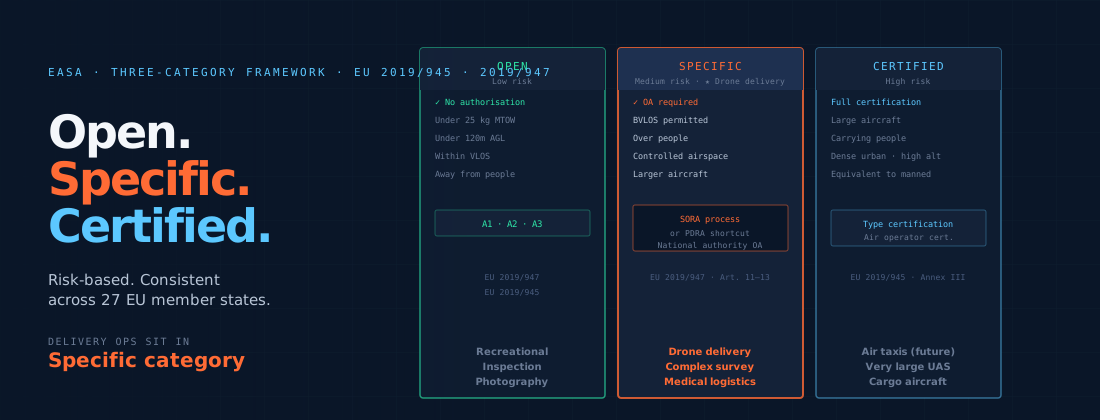
The direction of regulatory development in the most advanced markets — Australia, the United States, the European Union — is toward rules-based frameworks: defined technical standards that, if met, automatically qualify an operator for BVLOS operations without a case-by-case review. When those frameworks are in place, the commercial expansion of drone delivery will accelerate significantly.
Why some countries are ahead of others
The variation in regulatory progress between markets reflects several factors: the resources and technical expertise available to the national aviation authority, the political priority given to enabling drone delivery as an economic development objective, the lobbying activity of operators seeking to establish commercial operations, and the specific geographic and safety characteristics of the national airspace.
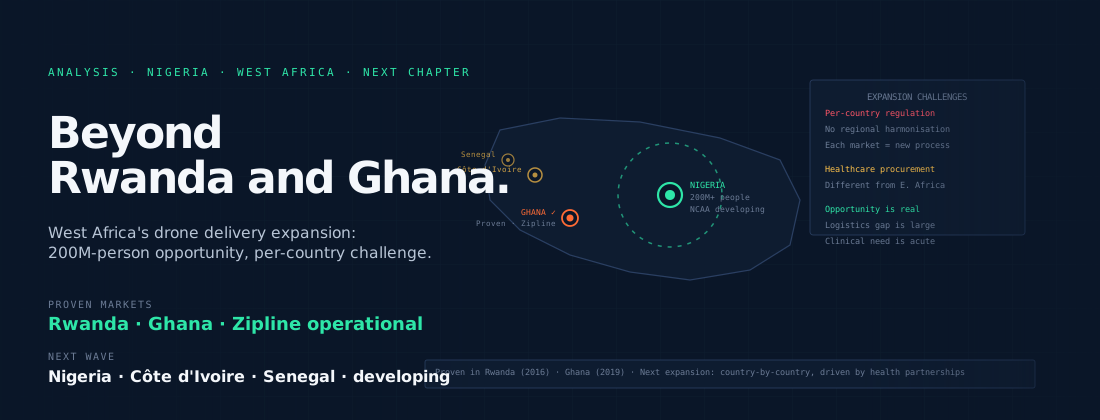
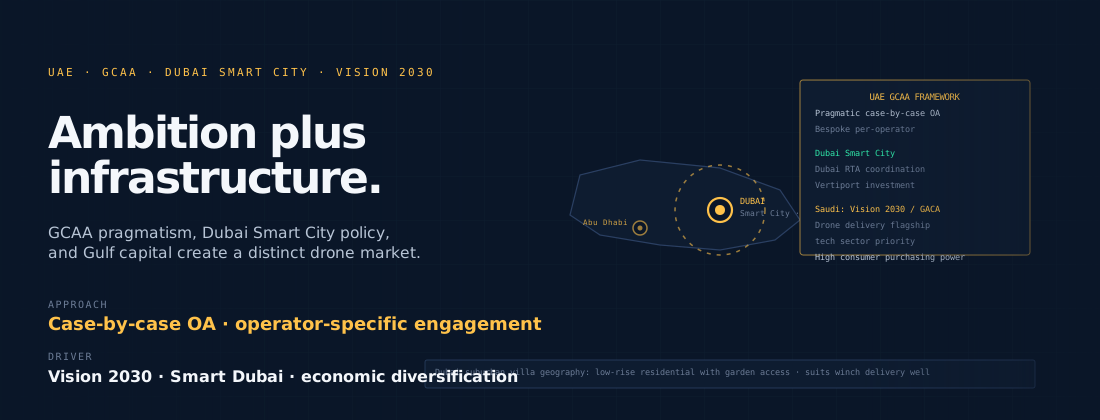
Australia has been a regulatory leader because CASA — the Civil Aviation Safety Authority — engaged early with operators including Wing and developed the frameworks needed for commercial BVLOS operations in suburban environments. Japan moved quickly to Level 4 — BVLOS over populated areas — because the government identified drone delivery as a solution to the healthcare logistics challenges of an ageing rural population. Rwanda was the first country to host large-scale commercial drone delivery because the government actively partnered with Zipline to develop the regulatory framework alongside the operation itself.