How operators choose hub locations: the geography of drone delivery infrastructure
A drone delivery hub is not simply a building with a carpark. It is the fixed point around which the entire delivery operation is organised. Its location determines the catchment area, the regulatory airspace engagement, the ground logistics chain, the weather exposure, and the competitive positioning of the service. The decision about where to place a hub is one of the most consequential in the establishment of a delivery operation — and it is one of the decisions about which operators are least publicly forthcoming.
Based on what is publicly available about existing operations, a picture of the criteria operators apply to hub site selection can be assembled.
The catchment area calculation
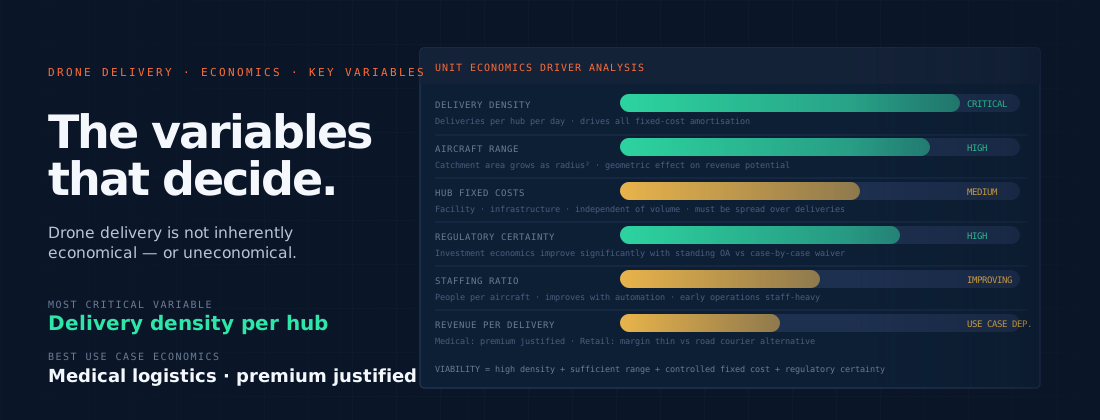
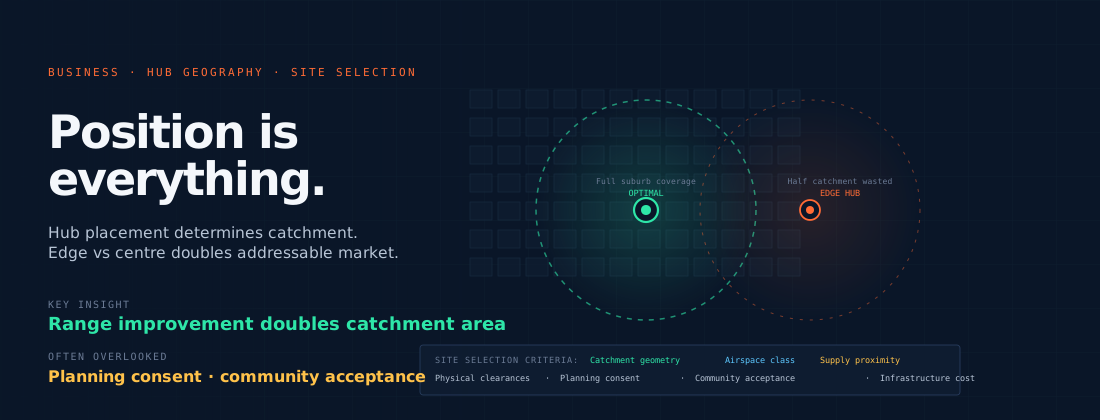
The primary driver of hub location is the delivery catchment area: the population of deliverable addresses within the operational range of the aircraft. For a hub with an aircraft capable of a ten-kilometre operational radius, the hub should ideally be positioned so that this circle captures the maximum number of deliverable addresses — which in most markets means a suburban residential area rather than an industrial zone or rural location.
The geometry matters: a hub positioned at the edge of a suburban area has half the effective catchment of one positioned at its centre, because the circle that defines operational range extends beyond the populated area in one direction. Operators position hubs to maximise the populated area within the operational circle, which generally means a location within or adjacent to the residential area being served rather than at its periphery.
Airspace and regulatory suitability
The airspace environment around a potential hub site is as important as its geographic position. A hub located within controlled airspace around an airport requires a more complex regulatory engagement than one in Class G uncontrolled airspace. A hub beneath a helicopter route, near a sensitive military installation, or within the approach path of a hospital helipad faces constraints that may be manageable but that add time and cost to the authorisation process.
Operators generally prioritise hub sites in airspace environments where the regulatory engagement for the proposed operations is tractable — where the CAA, FAA, or equivalent authority has established processes for the type of operation proposed, where no insurmountable airspace conflicts exist, and where the letter of authorisation or operational authorisation process is likely to succeed within a reasonable timeframe.
Ground logistics and restocking
The hub requires a supply of packages to deliver. For retail delivery operations, this means proximity to the retail partner’s inventory — typically a fulfilment store, a dark store, or a dedicated inventory facility. For medical logistics operations, proximity to the originating health facility, pharmacy, or laboratory. The ground logistics chain that brings packages to the hub for loading must be efficient: a hub that requires long road journeys to restock between deliveries has higher operational costs than one co-located with or adjacent to its inventory source.
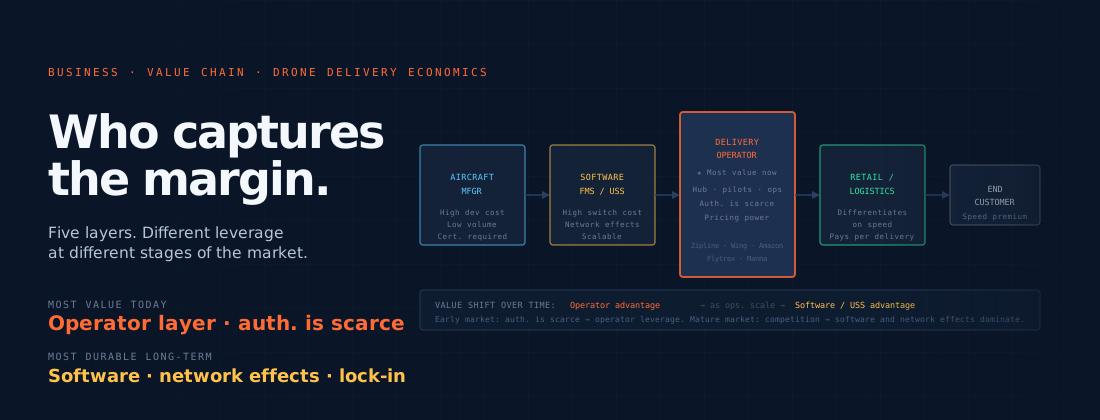
Wing’s Australian model — launching from sites near or co-located with retail partners in specific suburbs — reflects this logic. The hub is positioned to minimise the internal logistics cost while maximising the catchment area served by drone. The two objectives can be in tension: the optimal location for catchment area coverage may not be the optimal location for inventory logistics, and operators must balance them.
Physical site requirements
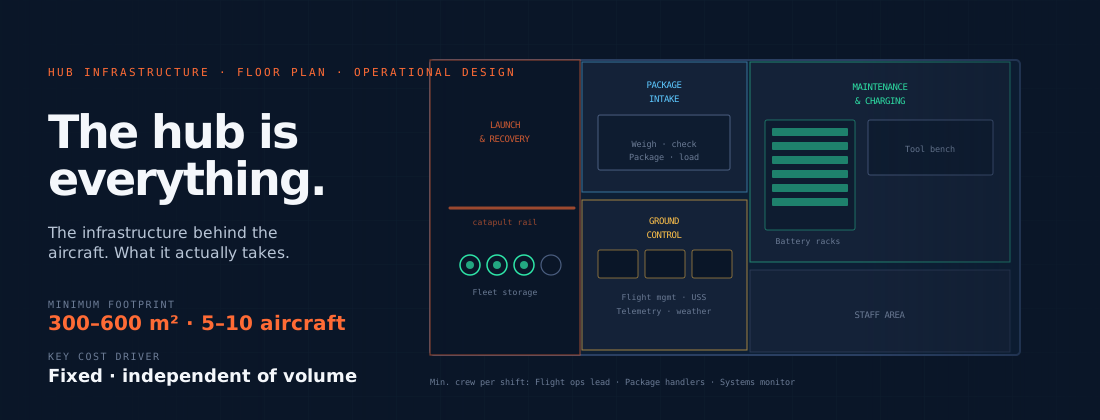
The physical requirements of a drone delivery hub are more constrained than those of a road delivery depot but less demanding than those of a manned aviation facility. Sufficient outdoor area for aircraft launch and recovery, with appropriate clearances and obstacle-free approach and departure paths, is the primary physical requirement. Weather protection for aircraft storage, maintenance workshop space, battery charging and storage infrastructure, and adequate connectivity for ground control system operation are secondary requirements that most light industrial or commercial units can accommodate with modification.
The size of the outdoor operating area required scales with the aircraft type and the operational tempo of the hub. A hub completing fifty deliveries per day with a fast-cycling drop delivery aircraft requires less outdoor space than one completing the same number of deliveries with a winch aircraft that needs a larger operating zone and a longer cycle time per delivery.
Planning and community consent
The planning consent implications of establishing a drone delivery hub are not trivial and are not always clearly defined in existing planning policy. Industrial use class permissions that apply to a logistics depot may not straightforwardly apply to an operation with aircraft movements. Local planning authorities, encountering drone hub applications, are often applying planning policy designed for different use types to a novel land use category.
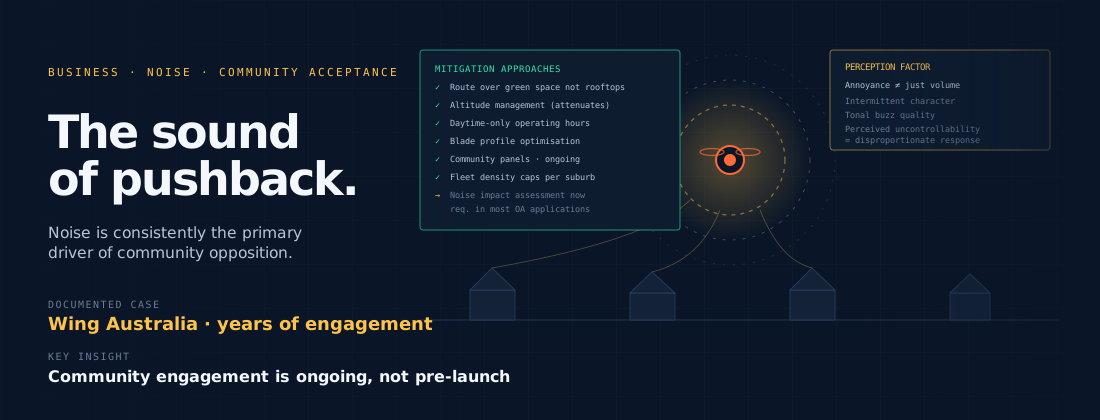
Beyond formal planning consent, community acceptance of a hub — its noise impact, its visual impact, its effect on local airspace — is a practical constraint that operators ignore at their peril. A hub that is legally authorised but that generates sustained community opposition is a hub whose long-term operating permission is at risk. Operators with experience of community engagement invest in it early, before hub establishment rather than reactively in response to complaints.