How a BVLOS drone delivery works: an interactive guide
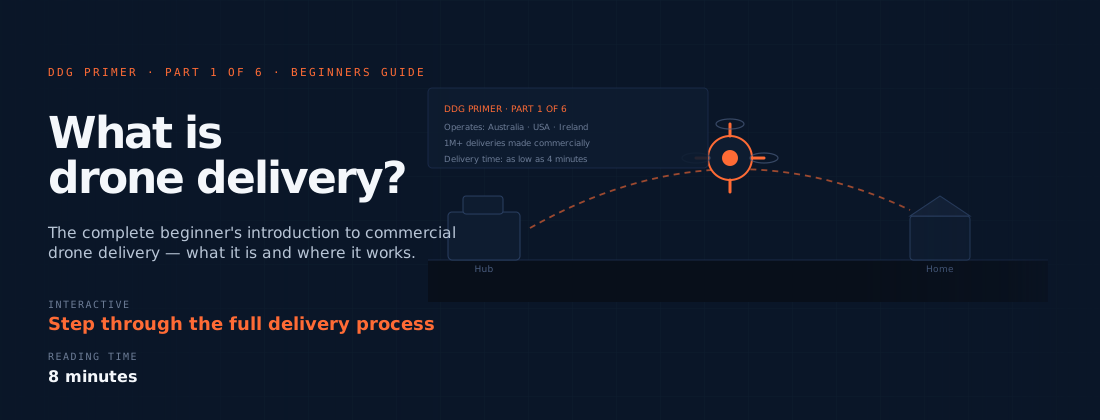
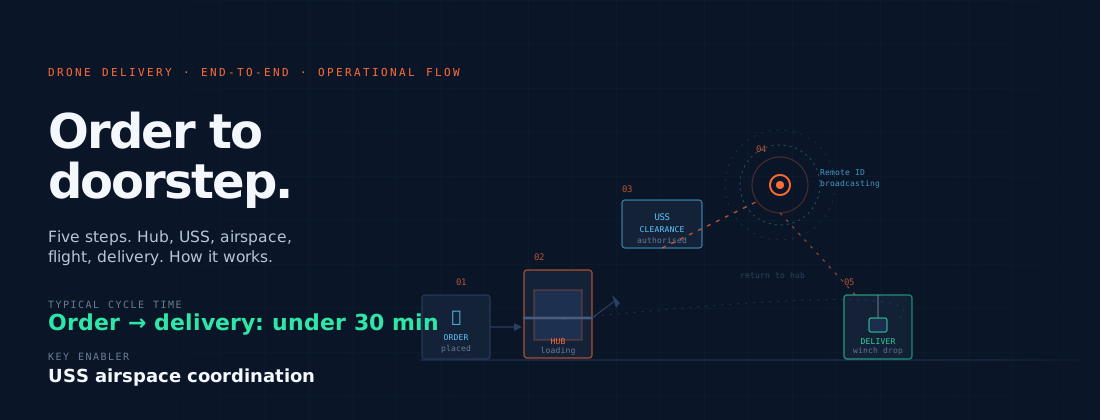
A commercial Beyond Visual Line of Sight drone delivery looks simple from the customer’s perspective: an order placed, a package arriving. Behind that arrival is a sequence of technical and regulatory steps that span the operator’s hub, the UTM system, the aircraft itself, and the pilot’s ground control station — all coordinated in real time.
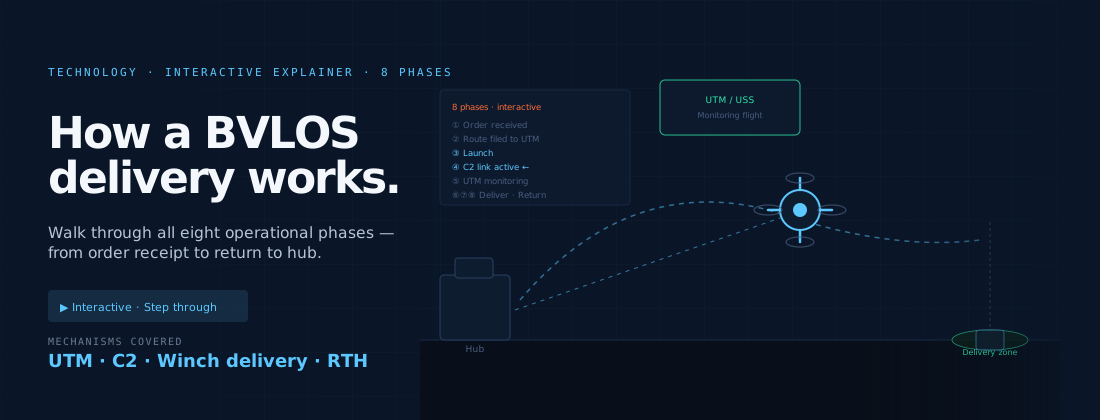
The eight-phase sequence below covers the complete operational cycle of a single BVLOS delivery: from the moment an order is received to the moment the aircraft returns to the hub and is readied for the next flight.
Why each phase matters
The operational complexity of BVLOS delivery is one of the reasons that commercial operations have taken longer to scale than early projections suggested. Each phase — route planning, UTM authorisation, C2 link management, delivery zone operations — involves technical systems, regulatory requirements, and failure modes that must be designed for before a single flight can take place.
The pre-flight phases — route planning and UTM filing — are invisible to customers but represent a significant portion of the operational work per flight. In current commercial operations, most of this is automated: the route library is pre-approved, the UTM filing is handled by the flight management system, and the pilot’s workload in the pre-flight phase is primarily monitoring rather than active planning.
The delivery phase — whether by winch, drop, or landing mechanism — is where the physics of the operation impose the most significant constraints. The delivery zone requirement, the payload fragility constraint, and the acoustic impact on the surrounding area are all determined by the delivery mechanism choice. Operators have made different choices based on their operational context and payload types.
The return phase closes the operational cycle and is directly relevant to hub economics: how quickly the aircraft can be turned around for the next delivery determines the maximum delivery volume per aircraft per day, which is one of the primary variables in the unit economics of a hub operation.