How drone delivery actually works: from hub to doorstep
Drone delivery is often described in terms of aircraft: their range, their payload, their speed. The aircraft is the visible part of a system that is considerably more complex. Understanding how a commercial drone delivery operation actually functions — end to end, from order placement to package arrival — requires looking at the full stack.
The hub model
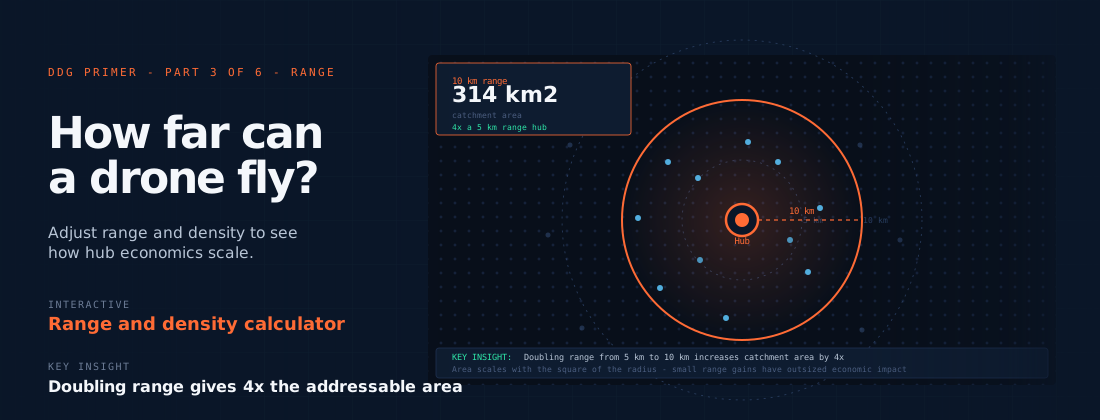
Commercial drone delivery operations are built around fixed hubs: facilities from which aircraft are launched, recovered, loaded and maintained. The hub is the operational centre of gravity for everything that follows. Its location relative to the delivery area it serves determines the corridors available, the distances aircraft must cover, and therefore the energy consumption, the flight cycle time, and the number of deliveries achievable per aircraft per shift.
Hub selection involves balancing a range of factors: proximity to the customer catchment area, availability of suitable commercial or industrial space, airspace characteristics (proximity to airports, controlled airspace boundaries, existing traffic patterns), planning permission requirements, and the infrastructure requirements for aircraft charging or fuelling.
Once established, the hub houses the launch and recovery infrastructure, the package intake and processing area, the ground control station from which operations are monitored, and the maintenance and storage facilities for the aircraft fleet. Staffing requirements vary by operator and operational model, but a functioning hub typically requires a minimum crew of three to four people during operating hours: a flight operations lead, package handlers, and a systems monitor.
The aircraft
Commercial delivery aircraft fall broadly into three configuration categories, each with distinct trade-offs. Multirotor aircraft — the configuration most people associate with consumer drones — generate lift through multiple spinning rotors and can hover precisely, take off and land vertically in confined spaces, and manoeuvre with high agility. Their limitation is energy efficiency: continuous powered lift requires continuous energy input, which limits range and increases operating costs over longer distances.
Fixed-wing aircraft generate lift aerodynamically, which makes them substantially more efficient in cruise — but they require forward velocity to stay airborne, which means they need either a conventional runway or a catapult launch and arrestor recovery system. They cannot hover, which constrains the delivery mechanism options available to operators.
Hybrid VTOL aircraft attempt to capture the advantages of both configurations: they take off and land using powered vertical lift, then transition to fixed-wing cruise for the majority of the flight. The transition adds mechanical complexity and requires careful flight control management during the transition phase, but the energy efficiency gains over longer distances are significant.
Flight management and airspace coordination
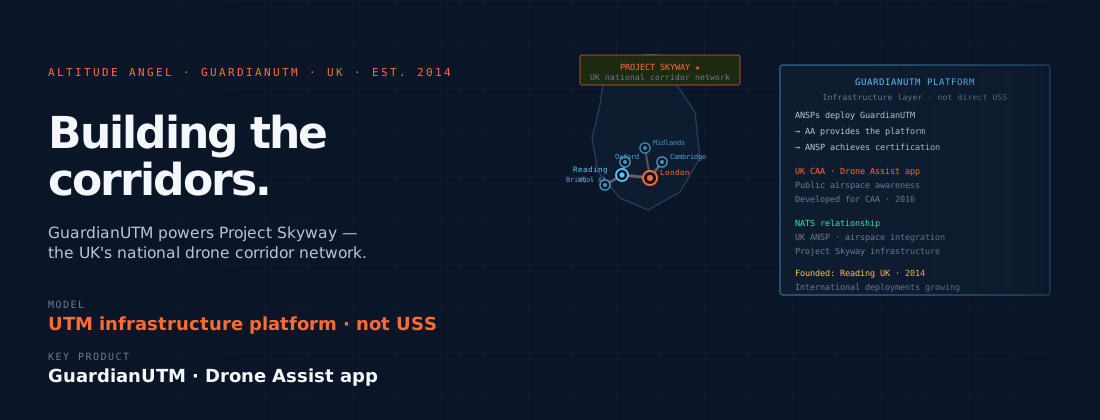
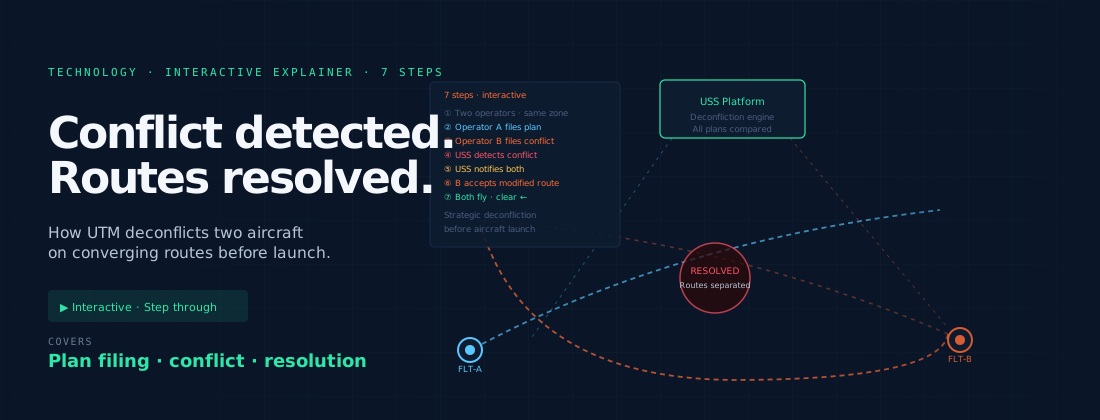
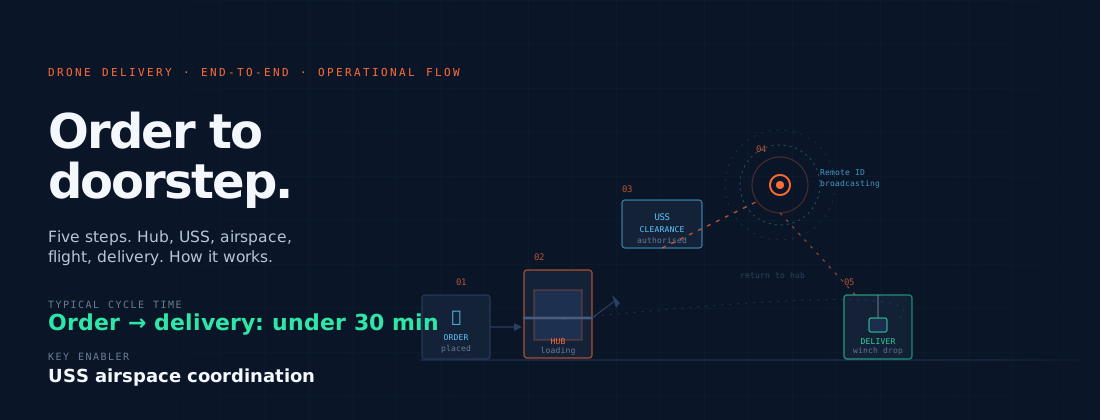
Before any delivery flight takes place, the planned flight must be coordinated with the airspace management system. In the United States, this involves submitting flight information to a UAS Service Supplier — a certified provider of digital airspace services — which checks the proposed flight against known traffic, restricted airspace, and other constraints, and either clears the flight or flags conflicts requiring resolution.
The Low Altitude Authorization and Notification Capability system, or LAANC, is the FAA’s near-real-time digital authorisation system for UAS operations in controlled airspace. It allows operators to receive near-instant clearances for operations in airspace that would otherwise require manual coordination with air traffic controllers. LAANC was launched in 2018 and has been progressively expanded to cover more airports and airspace.
During flight, the aircraft transmits telemetry data — position, altitude, speed, battery status — to the operator’s ground control station and to the USS. This data stream allows the operations team to monitor the flight in real time and intervene if anomalies develop. Remote ID broadcast is also required during flight, transmitting identification and position information that can be received by ground-based receivers.
The delivery mechanism
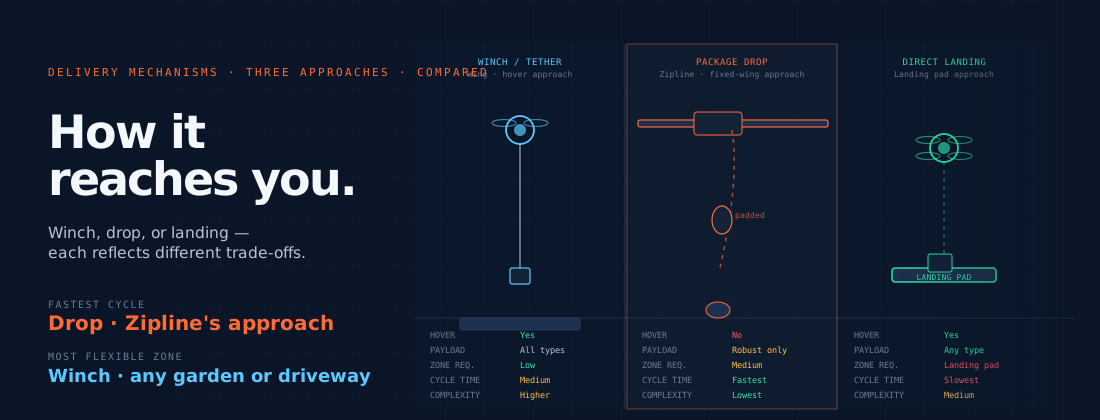
The final phase of the delivery — getting the package from the aircraft to the recipient — is handled differently by different operators. Hover-and-winch systems lower the package on a tether while the aircraft maintains position above the delivery zone: the package touches down, detaches, and the tether is retrieved. This allows delivery to locations without a clear landing pad but requires a relatively unobstructed vertical descent path.
Direct landing systems bring the aircraft to ground at the delivery location. This requires a suitable landing surface and adequate clearance, but eliminates the mechanical complexity of a winch system and allows for heavier payloads.
Drop delivery systems — used notably by Zipline for medical supply deliveries — release the package from a low altitude in a padded container designed to cushion the landing. This is the simplest mechanism and allows very fast delivery cycles, but limits the payload types that can be delivered without damage.
Recovery and turnaround
After delivery, the aircraft returns to the hub — either autonomously or under remote pilot guidance, depending on the operator’s authorisation and system capabilities. At the hub, it is recovered (landed, caught on an arrestor wire, or guided to a landing pad), inspected, recharged or refuelled, and reloaded for the next flight. The time between landing and next launch — the turnaround cycle — is a key operational variable that directly affects the throughput capacity of the hub.