What is drone delivery? A complete beginner’s introduction
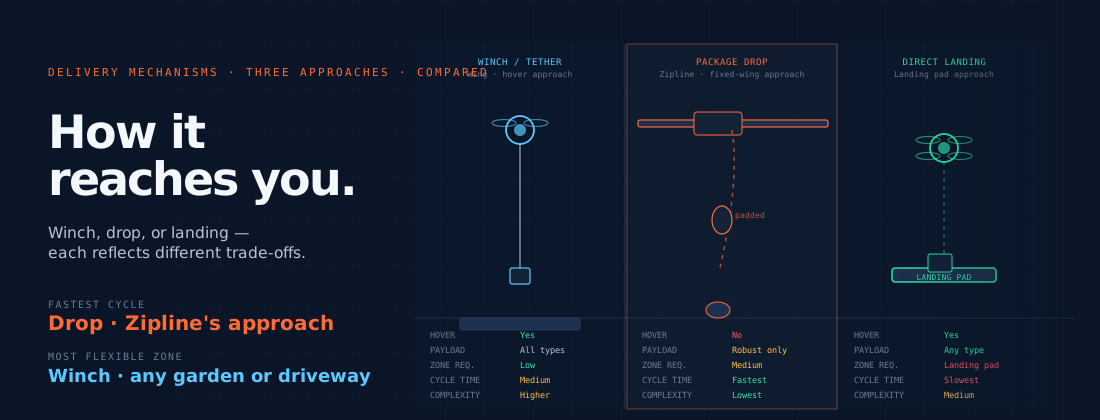
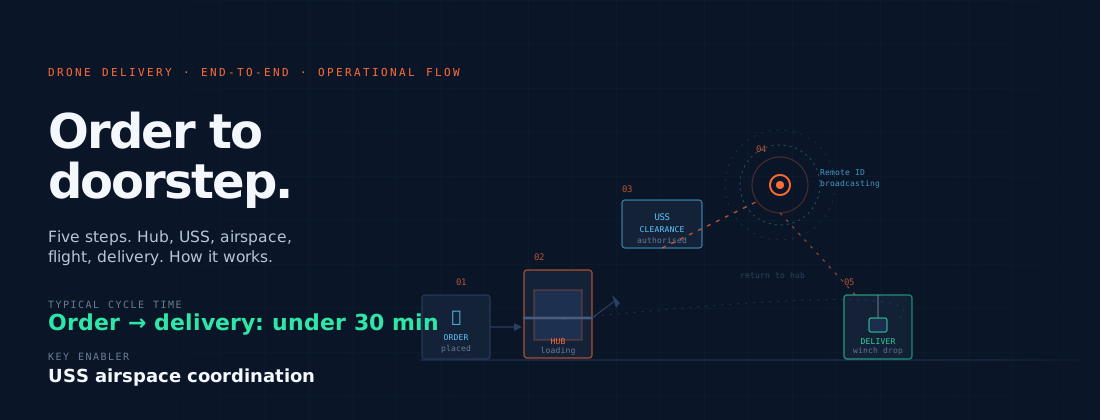
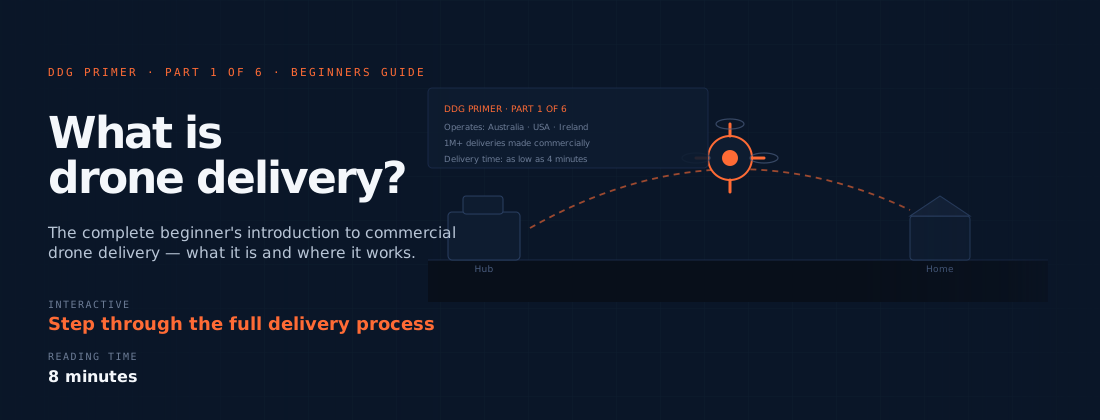
Drone delivery is the use of autonomous unmanned aircraft to transport packages directly from a dispatch point to a customer’s address. The aircraft flies without a pilot on board, navigates using GPS and onboard sensors, and delivers the package — typically by lowering it on a wire or dropping it in a padded container — without landing.
That is the simple version. The more interesting version involves a decade of engineering, a global regulatory effort to redesign the rules of low-altitude airspace, and a small number of companies that have quietly built the first commercially viable operations while the wider world was waiting for something that looked more like science fiction.
Where it already works
Commercial drone delivery is not a future technology. It is operating today, at commercial scale, in a handful of markets where the conditions align: the right regulation, the right geography, and a willing retail or healthcare partner.
Wing, owned by Alphabet, delivers coffee, food, and pharmacy products to residential addresses in suburban Australia and parts of the United States. Zipline delivers medical products — blood, vaccines, pharmaceuticals — to remote healthcare facilities in Rwanda, Ghana, and the United States. Manna delivers food and groceries in Ireland. Matternet delivers laboratory samples between Swiss hospitals. These are not trials. They are sustained commercial operations, measured in hundreds of thousands of deliveries.
What makes it different from a conventional delivery
The most important difference between drone delivery and conventional delivery is not the aircraft — it is the infrastructure. A conventional delivery requires a van, a driver, a road network, and a fuel supply. A drone delivery requires an aircraft, a ground control station, a charging or battery-swap system, and an airspace management connection. The marginal cost of adding one more delivery address to a drone hub’s catchment area is very different from adding one more stop to a delivery van route.
The second difference is speed. A drone flies in a straight line at cruise speed. A delivery van navigates roads, traffic, and parking. For time-sensitive deliveries — medical products, hot food, urgent pharmaceuticals — the speed advantage is significant. Manna’s average delivery time in Ireland is under four minutes from dispatch to doorstep.
What it cannot do yet
Current-generation delivery drones carry payloads of between one and five kilograms over distances of between two and thirty kilometres. That covers a significant proportion of e-commerce parcels, food orders, and medical supplies — but it excludes heavy items, large packages, and anything that requires the delivery to be made to a location without outdoor access.
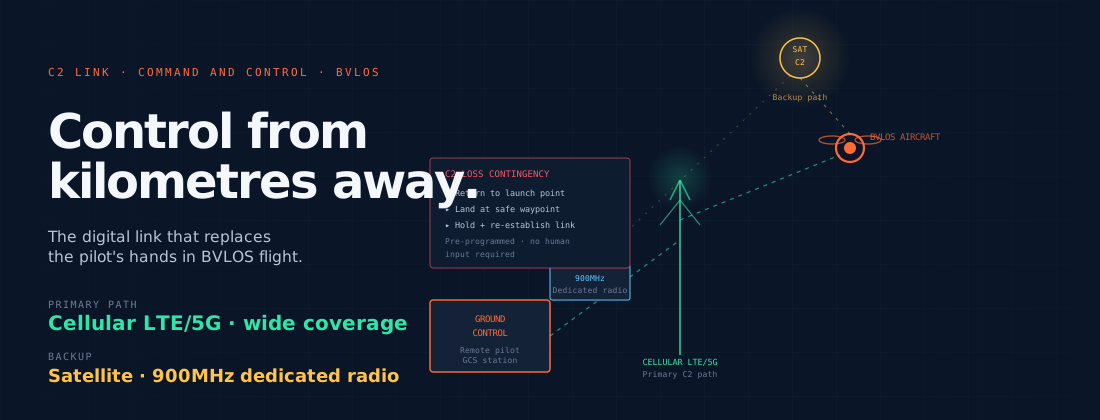
The regulatory framework also limits operations. Most commercial drone delivery today requires a qualified remote pilot to monitor each flight. The aircraft cannot legally fly beyond the range where a pilot can intervene if needed without specific authorisation — authorisation that is granted case by case in most markets, not automatically. Scaling from hundreds of deliveries per day to millions requires both the technology and the regulatory framework to develop further.
Why it matters
The logistics of getting small packages from a dispatch point to a customer address is one of the most expensive and carbon-intensive parts of the modern supply chain. Last-mile delivery — the final leg from a local depot to the customer’s door — accounts for a disproportionate share of logistics cost and emissions. A delivery drone that can make that journey without a driver, without road infrastructure, and on electric power has a cost and emissions profile that, at sufficient volume, is significantly better than conventional alternatives.
The markets where the impact is greatest are not necessarily the wealthy consumer markets that receive most of the media attention. They are the remote communities in sub-Saharan Africa, the island populations of the Pacific, and the rural healthcare networks that conventional logistics serves badly. Drone delivery has already demonstrated, in Rwanda and in Papua New Guinea and in remote Alaska, that it can serve those communities in ways that no ground-based alternative can match.