Winch, drop or landing: how each drone delivery mechanism works
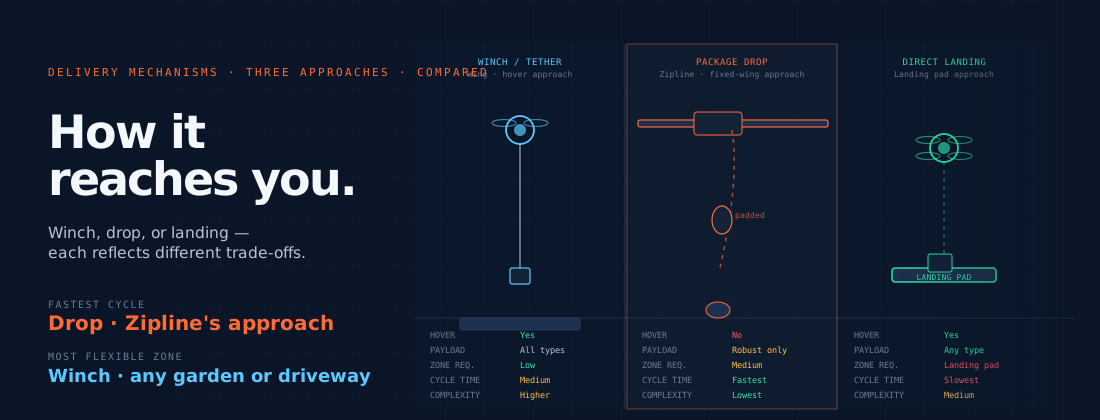
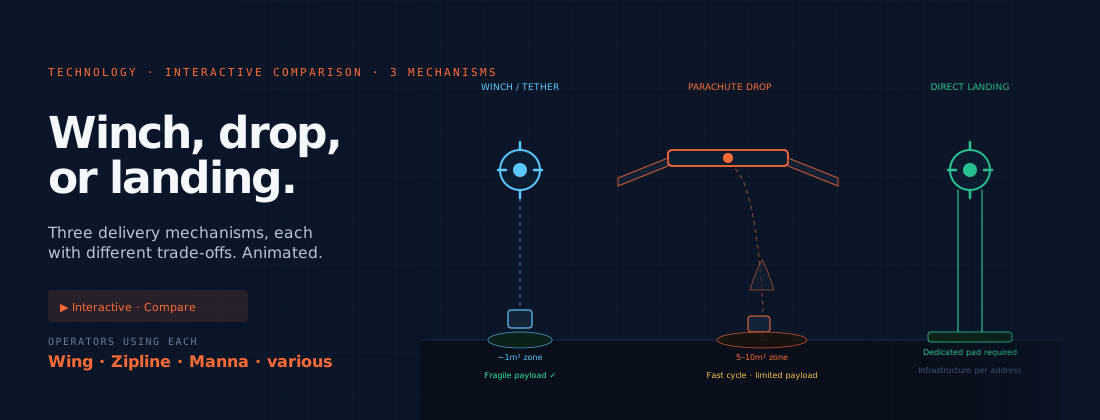
The moment of delivery — the transfer of a package from a drone to a customer — is where the physical reality of the operation is most visible. It is also where the most significant operational trade-offs are made. Three mechanisms are in active commercial use: the winch tether, the parachute or guided drop, and direct landing. Each represents a different solution to the same problem, with materially different implications for where delivery is possible, what can be delivered, and how fast the aircraft can complete its cycle.
Why the mechanism choice matters beyond the delivery itself
The delivery mechanism determines more than how the package arrives. It determines the proportion of addresses that are physically deliverable — what is sometimes called the addressable density of the operation.
A winch delivery requires approximately one square metre of vertical clearance above the delivery point and a surface large enough for the package to land on. This is achievable for most residential addresses with gardens, but excludes dense apartment blocks, addresses with overhead obstructions, and locations without accessible private outdoor space. The addressable density for winch delivery in suburban residential areas is typically high; in dense urban areas it is significantly lower.
A drop delivery requires a larger clear zone — typically five to ten square metres — for the package to land safely without hitting obstacles. This reduces addressable density further, particularly in gardens with trees, garden furniture, or other objects. The compensation is speed: a drop delivery does not require the aircraft to hover, making it faster per cycle and suitable for high-frequency medical logistics where delivery speed matters more than delivery precision.
A landing delivery, while offering the broadest payload flexibility, requires dedicated landing infrastructure at each delivery point. This infrastructure — a landing pad with appropriate clearance and a safe zone around it — represents a capital cost per address that fundamentally limits addressable density unless it is provided as shared infrastructure (a communal pad serving multiple households, for example).
The mechanism choice also determines the acoustic impact profile of the operation. A winch delivery with the aircraft hovering directly over the delivery point generates sustained noise at that location for the duration of the lowering sequence. A drop delivery with the aircraft at cruise speed generates a brief, transient acoustic event. A landing delivery generates noise at the landing pad for the duration of the landing, package release, and departure sequence. These acoustic profiles affect community acceptance in different ways depending on the residential context.