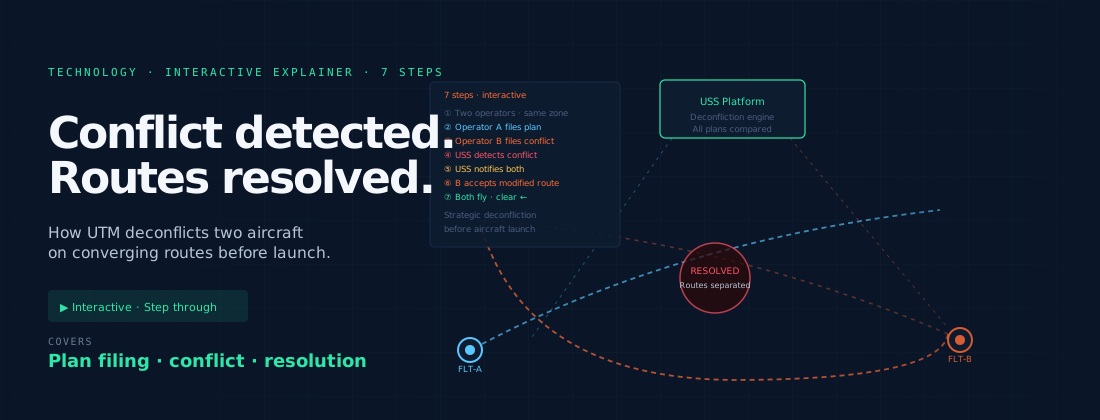
How UTM deconflicts two aircraft on converging routes: an interactive explainer
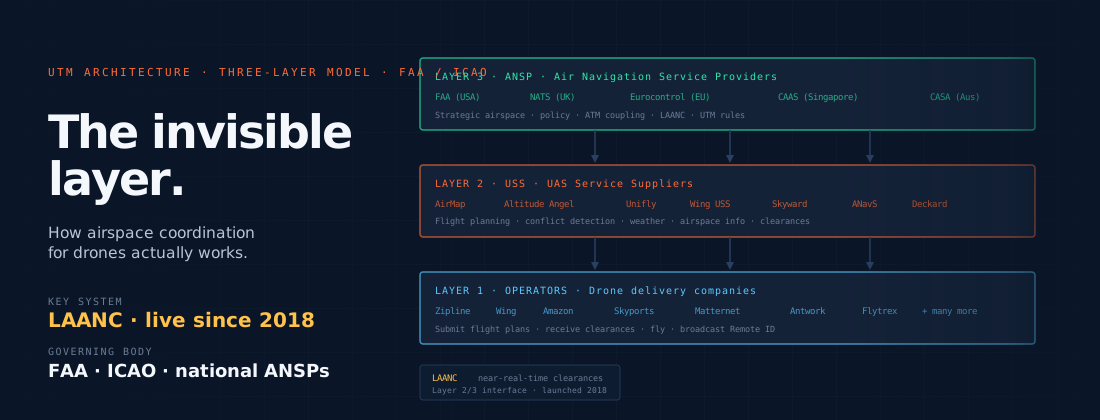
As the number of commercial drone delivery operations in a given airspace increases, the problem of ensuring that no two aircraft occupy the same airspace volume at the same time becomes more demanding. In low-density operations — one or two flights per day from a single hub — conflicts with other aircraft are rare. In high-density operations — tens or hundreds of flights per day from multiple hubs in a shared zone — deconfliction becomes a continuous process that the UTM system must manage automatically.
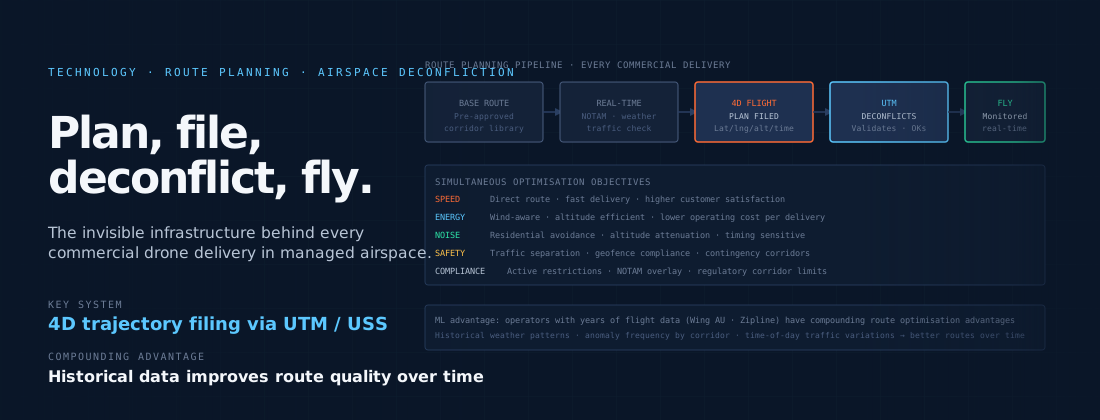
The seven-step scenario below shows how a UAS Service Supplier platform detects a conflict between two independently filed flight plans and coordinates a resolution — before either aircraft has launched.
Strategic versus tactical deconfliction
The scenario above is an example of strategic deconfliction: conflicts are detected and resolved at the planning stage, before any aircraft is airborne. Strategic deconfliction is tractable with current UTM technology — it is essentially a scheduling and routing optimisation problem that the USS can solve computationally for all filed plans in its system.
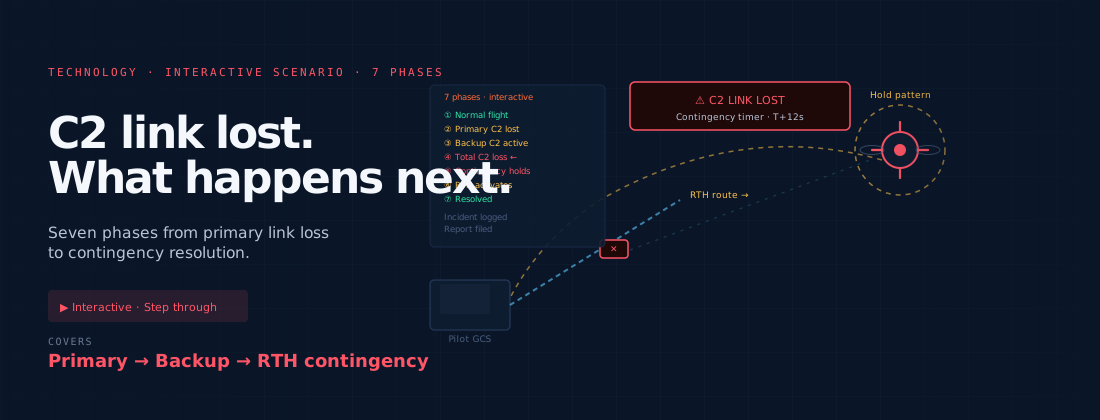
The harder problem is tactical deconfliction: managing conflicts that emerge in flight because aircraft have deviated from their planned trajectories due to weather, technical anomalies, or other operational factors. Tactical deconfliction requires the USS to receive real-time telemetry from all aircraft in its zone, detect emerging conflicts between actual positions rather than planned positions, and issue resolution advisories to affected pilots fast enough to be actionable.
Tactical deconfliction for multiple simultaneous commercial drone operations in shared airspace is an area of active technical development and regulatory framework design. The performance standards for USS tactical deconfliction — latency, coverage, conflict detection accuracy — are among the most technically demanding requirements in the U-space framework and the FAA’s BVLOS rulemaking development.
The USS platforms that will ultimately manage high-density commercial drone operations — AirMap, Unifly, Altitude Angel, ANRA Technologies, and others — are building and demonstrating their tactical deconfliction capabilities as part of the evidence base for the regulatory frameworks that will govern commercial operations at scale.