What happens when a drone loses its C2 link: an interactive scenario
The Command and Control link is the communication channel through which a remote pilot maintains authority over an aircraft flying Beyond Visual Line of Sight. Unlike a recreational drone that a hobbyist can see, a commercial BVLOS delivery drone may be kilometres away from its pilot — over buildings, terrain, or water — when a C2 link problem occurs. The design of the response to that problem is one of the most important safety questions in commercial BVLOS operations.
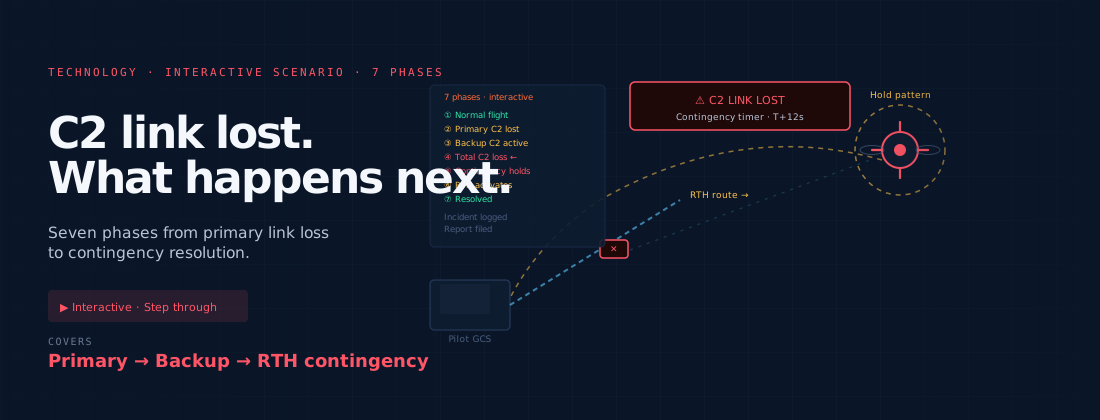
Every commercial BVLOS operator is required, as part of their operational authorisation safety case, to define how their aircraft behaves when the C2 link is lost. The seven-phase scenario below traces the sequence from normal operations through complete C2 loss and the contingency response.
How operators design for C2 loss
The C2 link contingency design is typically tiered: a degraded primary link triggers an automatic switch to the backup; complete loss of both links triggers a timer; expiry of that timer triggers the contingency procedure. The contingency procedure itself — what the aircraft does autonomously when all C2 links are lost — is the most critical design decision.
Most commercial operators use a return-to-hub contingency: the aircraft follows a pre-planned autonomous route back toward the hub, maintaining a safe altitude and route that was approved as part of the operational authorisation. The return route is filed with the UTM system as part of the contingency flight plan, so the USS is aware of the aircraft’s intended trajectory even when the pilot cannot communicate with it.
The timer between C2 loss detection and contingency activation — typically in the range of 30 seconds to several minutes depending on the operational context — is designed to allow for transient link losses that self-resolve. A brief tunnel, a temporary cellular dead spot, or a momentary radio interference event should not trigger an unnecessary return-to-hub that interrupts a delivery. The timer provides time for the link to re-establish before the more drastic contingency response activates.
The regulatory requirement to define and demonstrate the C2 loss contingency procedure is one of the primary drivers of the complexity of commercial BVLOS safety cases. Regulators — FAA, CAA, EASA member state authorities — scrutinise the contingency design carefully, because the scenario it addresses is not hypothetical: link losses occur in commercial operations, and the safety of the contingency response is what prevents them from becoming incidents.