DroneUp and the Walmart partnership: what US retail drone delivery looks like in practice
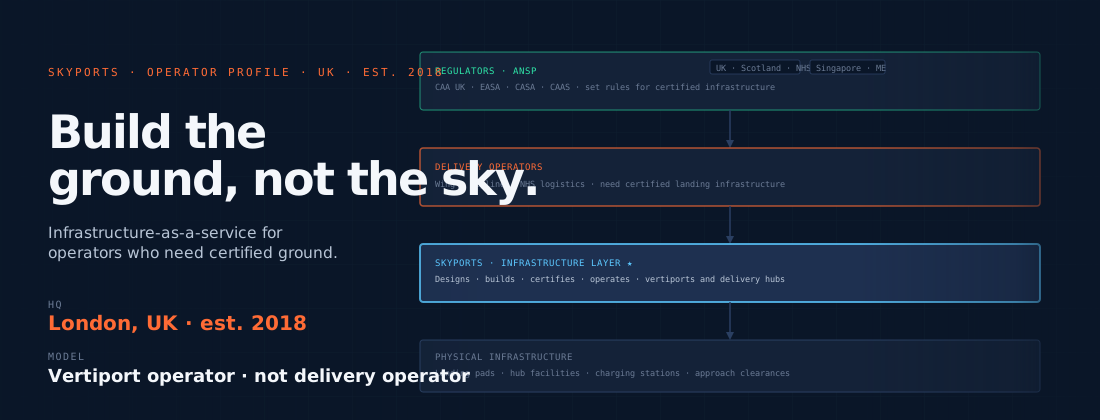
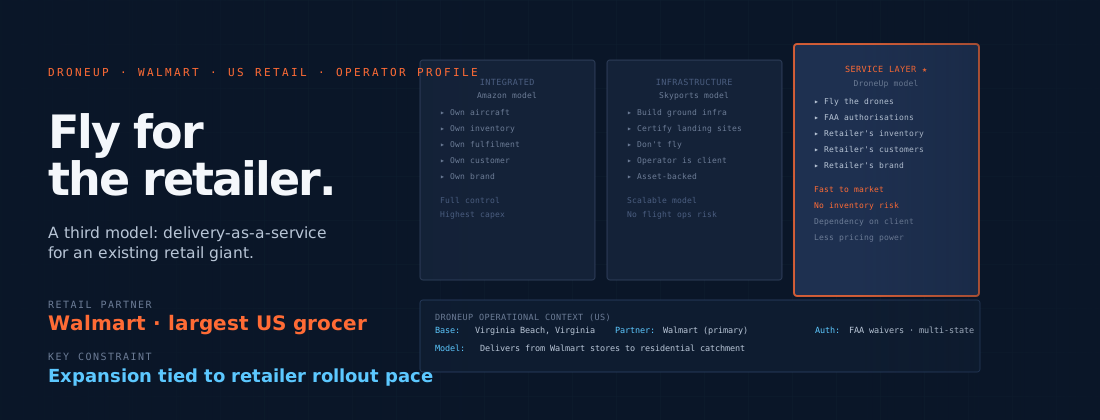
Most of the companies at the forefront of commercial drone delivery in the United States have pursued one of two models: vertically integrated operators that build their own aircraft and control the full stack, or infrastructure-focused companies that provide ground systems and leave the flight operations to partners. DroneUp, founded in Virginia Beach, Virginia, has pursued a third model: drone delivery as a professional service layer for a major retailer, with Walmart as its primary commercial partner.
The partnership between DroneUp and Walmart, announced in 2021 and expanded through subsequent years, represents the most significant attempt by a major American retailer to offer residential drone delivery as a standard service option rather than a demonstration project. Understanding how it has operated provides a useful counterpoint to the purely operator-led models that dominate discussion of the sector.
How the Walmart-DroneUp model works
The operating model involves DroneUp establishing delivery operations from existing Walmart stores, using the store’s inventory, carpark infrastructure, and address catchment area as the basis for drone delivery operations. Customers ordering eligible items through Walmart’s ordering channel can select drone delivery as a fulfilment option where the service is available. DroneUp handles the flight operations, the FAA authorisation, and the delivery execution; Walmart handles the retail relationship, the order processing, and the inventory.
This model has several advantages over greenfield drone delivery operations. The inventory problem — one of the persistent challenges for drone delivery services that must stock and manage their own product catalogue — is solved by the existing retail infrastructure. The customer relationship is pre-existing. The address catchment area is defined by the store’s existing customer geography. What DroneUp provides is the certified flight operation capacity to serve that existing customer base with a new fulfilment option.
The limitation is dependency: DroneUp’s expansion is tied to Walmart’s willingness to roll out the service across additional store locations, and Walmart’s commercial relationship with DroneUp determines the economics of each site.
The FAA authorisation basis
DroneUp’s US operations have been conducted under FAA waivers and operational authorisations — the case-by-case framework that preceded rules-based BVLOS regulations in the United States. The company has accumulated operational experience across multiple US states, primarily in the south and sunbelt markets where Walmart’s store coverage is dense and suburban geography suits drone delivery operations.
The authorisation basis has been a constraint on expansion velocity. Each new location requires engagement with the local FAA Flight Standards District Office and potentially with local authorities. The company has navigated this process across multiple sites, building a body of operational authorisations that represents a significant investment in regulatory engagement. That investment becomes proportionally more valuable as the number of operations it covers grows.
What the model has demonstrated
The Walmart-DroneUp partnership has demonstrated that consumer demand for drone delivery from a major retailer is real — customers have used the service when it has been available. It has also demonstrated the operational complexity of scaling a service that depends on FAA authorisations, the limitations of current aircraft range in serving suburban address catchments from single store locations, and the commercial dynamics of a partnership where the drone operator is structurally in a service provider position relative to a very large retail client.
The service provider model is less common in drone delivery than the integrated operator model, but it has important advantages in markets where the inventory and customer relationship infrastructure of a major retailer provides a faster route to delivery density than building those elements from scratch. Whether the model produces durable economics at scale depends on the relationship between the service fee DroneUp can charge and the operational cost of each delivery — a question that the partnership’s commercial terms, which are not public, determine.
The competitive context
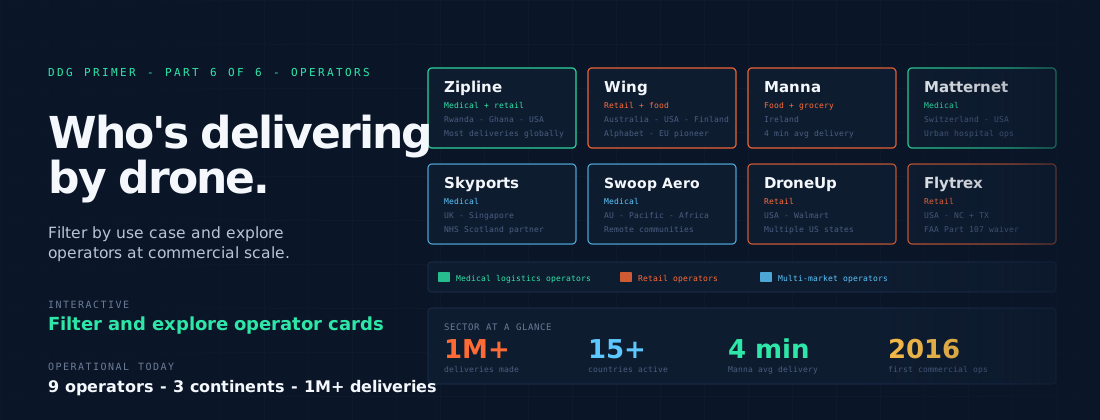
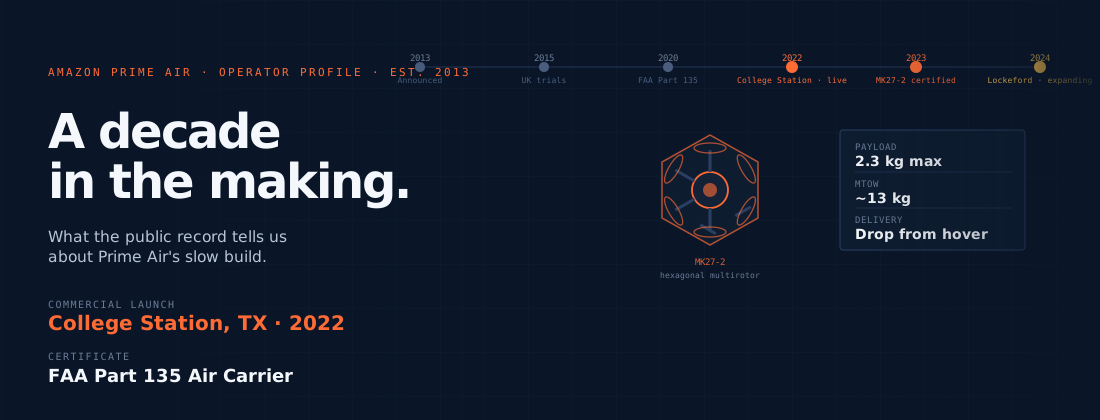
DroneUp operates in a US market that also contains Wing’s operations in multiple states and Amazon’s Prime Air service, which has been developing its own residential delivery operations from specific Amazon fulfilment sites. The presence of multiple models — operator-as-retailer (Amazon), independent operator with retail partnerships (Wing), and operator-as-service-layer (DroneUp) — provides a real-world comparison of different strategic approaches to the same market. The data produced by these parallel operations will inform the industry’s understanding of which models prove most economically durable as the market matures.