The aircraft-to-pilot ratio: how regulatory and technical development will change drone delivery staffing
This article is DDG’s analytical assessment of the aircraft-to-pilot ratio question in commercial drone delivery, based on publicly available regulatory and operational information. Forward-looking observations are analytical in nature.
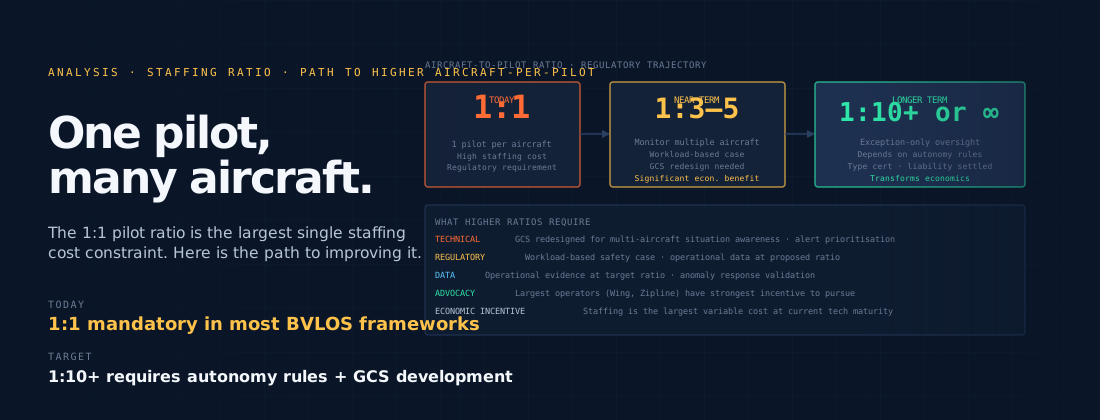
The staffing model of commercial BVLOS drone delivery is, in most current regulatory frameworks, a one-to-one relationship: one qualified remote pilot in command per aircraft in flight. The pilot may be monitoring the flight from a ground control station rather than maintaining visual contact with the aircraft, but they are present, accountable, and must be available to intervene if the aircraft requires it.
This one-to-one requirement is the single most significant constraint on the staffing economics of drone delivery. A hub making 100 deliveries per day, each with its own pilot in command, requires a very different staffing structure from one where a single pilot monitors ten aircraft simultaneously. The economic difference is not marginal: it is the difference between an operation that requires significant pilot labour as a fixed cost and one where that cost is distributed across a larger delivery volume.
What current regulations actually require
The specific requirement for remote pilot in command varies by jurisdiction and operational authorisation. In the United States under Part 107, a remote pilot in command must be present and responsible for each flight. In the EU under the EASA Specific Category framework, the operational authorisation specifies the command and control requirements for the specific operation, which may or may not mandate a one-to-one pilot ratio depending on the operational design.
In practice, most commercial delivery operations maintain a close to one-to-one ratio not only because regulations require it but because the operational complexity of managing multiple simultaneous BVLOS flights — monitoring C2 links, weather, traffic, and aircraft status for multiple aircraft at once — makes higher ratios demanding even where regulations would permit them. The ground control station design, software interface, and alert management systems required to support a pilot monitoring multiple aircraft require specific development that most current-generation ground control systems have not fully implemented.
The intermediate step: higher ratios within current frameworks
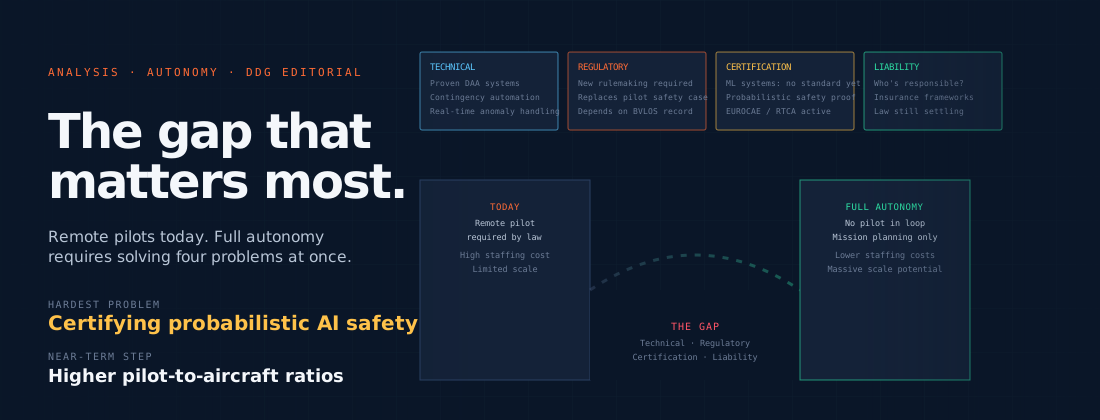
The path to higher aircraft-to-pilot ratios does not require fully autonomous operation — the complete removal of the pilot from the loop. An intermediate position, in which one pilot monitors and is responsible for multiple aircraft simultaneously, delivers significant economic benefit while maintaining the remote pilot in command that current regulatory frameworks require.
Some regulatory frameworks already contemplate higher pilot ratios for specific operational contexts. Operations where all aircraft in a fleet are flying pre-planned routes in well-understood airspace, with high automation of normal operations and alerts for anomalies, present a different workload profile from an operation where each aircraft requires active pilot input during flight. The workload-based argument for higher ratios — that a pilot whose aircraft are largely autonomous can safely monitor several simultaneously — is the regulatory argument that operators seeking higher ratios are making.
The safety case for higher ratios requires demonstrating that the pilot can effectively monitor and respond to anomalies across all aircraft in their charge, that the ground control system provides adequate situation awareness, and that the contingency procedures for simultaneous anomalies across multiple aircraft are adequate. These demonstrations require operational data from the ratio configurations being proposed — data that can only be accumulated through operations at those ratios, creating a chicken-and-egg dynamic that regulators and operators are working through together.
The technology requirements
The technology required to support higher aircraft-to-pilot ratios centres on the ground control station. Current-generation ground control systems, designed for one-to-one or low-ratio operations, provide the aircraft state monitoring and flight management interfaces appropriate for a single pilot managing a single aircraft. A ground control system designed for a single pilot monitoring ten aircraft must aggregate situation awareness across all aircraft, prioritise alerts by urgency, provide intuitive intervention interfaces for the aircraft requiring attention, and do all of this without creating a monitoring workload that exceeds the pilot’s cognitive capacity.
The development of ground control systems capable of supporting higher pilot ratios is an active area of development for operators seeking to improve their staffing economics. It involves human factors research into pilot monitoring capacity and alert response, software development for improved situation displays, and testing under operational conditions to validate that the system supports the intended pilot workload rather than overwhelming it.
The regulatory trajectory
The direction of regulatory travel on aircraft-to-pilot ratios is toward higher ratios as operational safety data accumulates and as the technology supporting those ratios matures. The pace of that travel depends on the pace of operational data accumulation — which in turn depends on the pace of commercial operations at current ratios — and on the willingness of regulators to approve progressive increases in ratio based on the safety cases that operators bring.
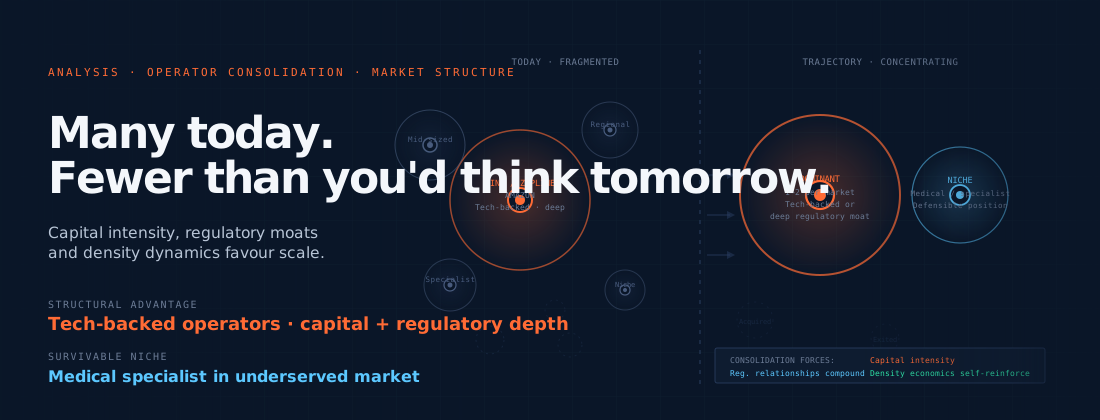
The operators whose economics most depend on higher ratios are the largest commercial operators — those whose hub volumes make the staffing cost of one-to-one ratios most consequential. These operators have the strongest commercial incentive to pursue higher ratios, the operational scale to generate the safety data that supports regulatory approval, and the resources to develop the ground control technology required. The regulatory trajectory will be shaped primarily by their engagement with aviation authorities and the safety records they accumulate.