Who’s delivering by drone — and where in the world it is happening
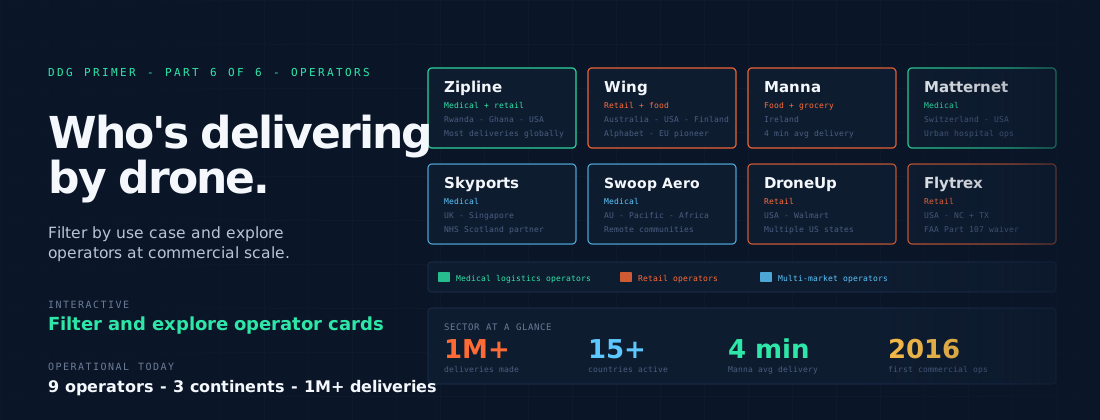
The commercial drone delivery sector in 2026 is dominated by a small number of operators that have achieved genuine commercial scale — measured in sustained operations, hundreds of thousands of deliveries, and operations that generate real revenue rather than grant funding. Understanding who they are, where they operate, and what distinguishes their approaches is the fastest way to understand the state of the industry.
The medical logistics pioneers
The companies with the deepest operational track records built their businesses on medical logistics — delivering blood products, vaccines, pharmaceuticals, and diagnostic samples — rather than consumer retail. The reason is economic: healthcare systems are willing to pay for reliable, fast delivery of time-critical medical products in a way that retail customers are not yet willing to pay premium prices for drone-delivered groceries.
Zipline is the most significant operator in this category. Founded in 2014 and operational in Rwanda from 2016, Zipline has made more commercial drone deliveries than any other operator in the world. Its fixed-wing aircraft flies at speed, drops payloads in guided containers, and returns to base — a simple, reliable system optimised for the use case rather than designed to be universally applicable. Zipline now operates in the United States as well as Africa, expanding into retail pharmacy delivery alongside its medical logistics work.
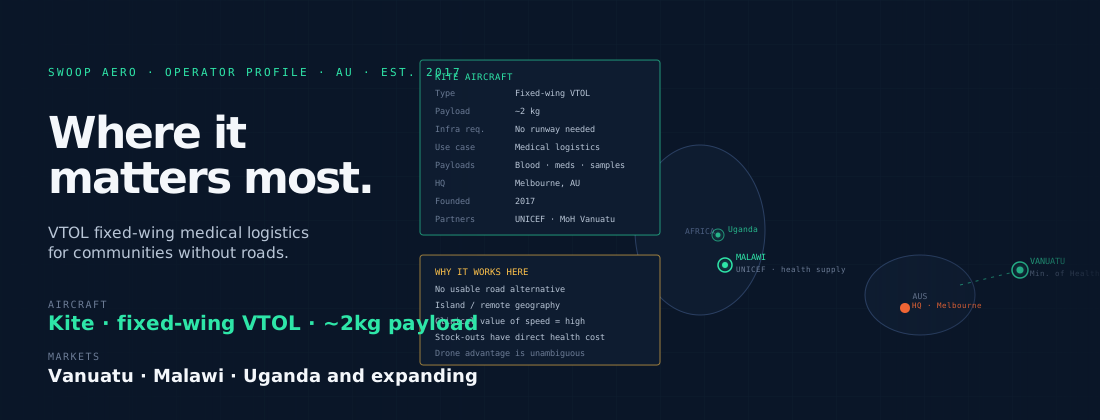
Matternet operates medical drone delivery in Switzerland, primarily transporting laboratory samples between hospitals in urban environments. The Swiss model is distinctive: Matternet has achieved regulatory authorisation for flights over urban areas that no other operator has replicated at scale. Swoop Aero operates medical logistics in Australia, Mozambique, and Malawi — an operator with one of the most geographically diverse operational footprints in the sector.
The retail delivery operators
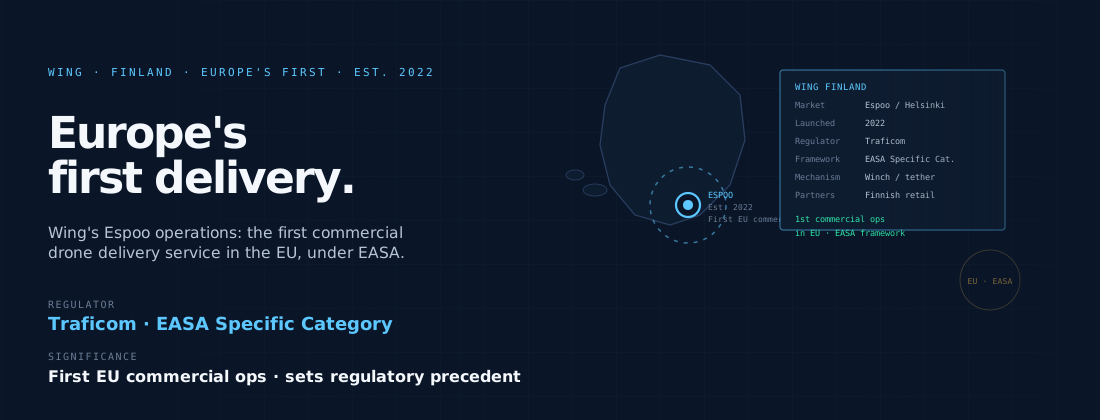
Wing, owned by Alphabet, is the largest retail drone delivery operator by number of deliveries. It operates in Canberra and Logan in Australia, in the Dallas-Fort Worth area of the United States, and launched Europe’s first commercial drone delivery service in Espoo, Finland in 2022. Wing’s aircraft — a hybrid VTOL design — delivers from retail partners including pharmacies, food outlets, and consumer goods retailers to residential addresses within its operational radius.
Manna operates in Ireland, delivering from supermarkets, pharmacies, and food retailers to residential addresses. Its operational record in Ireland — including one of the highest rates of customer repeat usage of any drone delivery service — has made it a reference case for the consumer acceptance question that sceptics raise about residential drone delivery.
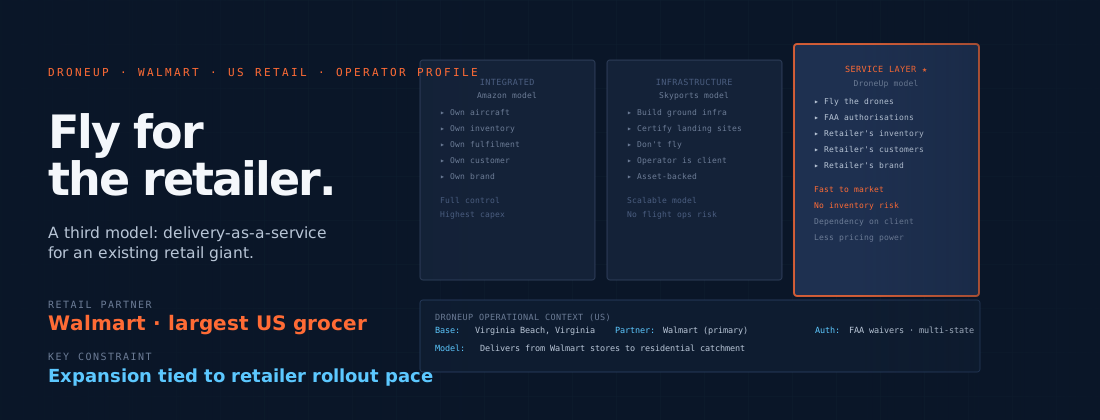
Flytrex operates in the United States, partnering with retailers to serve suburban residential areas in North Carolina and elsewhere. DroneUp operates with Walmart as its primary retail partner across multiple US markets.
Amazon Prime Air
Amazon announced drone delivery in 2013 and has been developing Prime Air since. Its current aircraft, the MK30, is operational in limited US markets. Amazon’s scale and ambition make it an unavoidable presence in any discussion of the industry, but its operational record to date is more limited than that of dedicated operators like Wing or Zipline. The company’s commitment to drone delivery is not in doubt; the timeline for it becoming a significant fraction of Amazon’s overall delivery volume remains unclear.
The geography of current operations
The markets with active commercial drone delivery operations in 2026 are concentrated in a small number of countries: Australia, the United States, Ireland, Switzerland, Finland, Rwanda, Ghana, and a handful of others. The common characteristics of these markets are: a national aviation authority willing to engage constructively with BVLOS authorisation requests, suburban residential geography that suits current-generation delivery mechanisms, and retail or healthcare partners willing to integrate drone delivery as a service.
The markets that are developing rapidly — Japan, South Korea, the UAE, Singapore — have all the enabling conditions and are likely to see commercial operations at scale within the next two to three years. The markets with the largest long-term potential — India, Brazil, Nigeria — face regulatory and infrastructure challenges that make near-term scaling more difficult, but their scale of unmet logistics need is large enough to make them strategically significant despite the slower development timeline.