eVTOL versus delivery drones: why the two industries are related but distinct
The terms used to describe electrically powered vertical take-off and landing aircraft — drones, eVTOL, advanced air mobility, urban air mobility — are used inconsistently in public discourse, leading to a conflation of two substantially different industries: the commercial delivery drone sector that is already operational at commercial scale, and the passenger eVTOL sector that is at an earlier stage of development and certification.
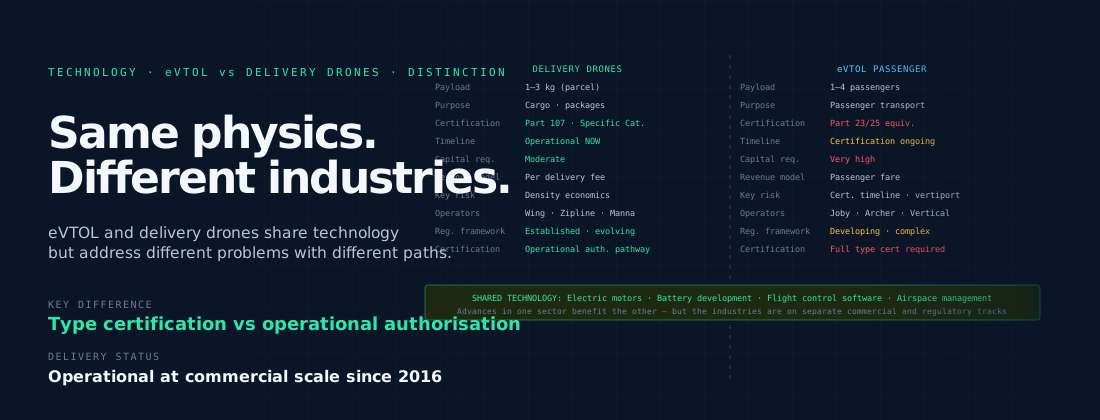
The shared characteristics — electric propulsion, vertical take-off capability, autonomous or semi-autonomous flight — are real, and the underlying technology development in motors, batteries, flight control software, and airspace management is relevant to both. The differences — in payload type, operational environment, certification pathway, economics, and use case — are substantial enough that the two industries are better understood as adjacent rather than overlapping.
What eVTOL is
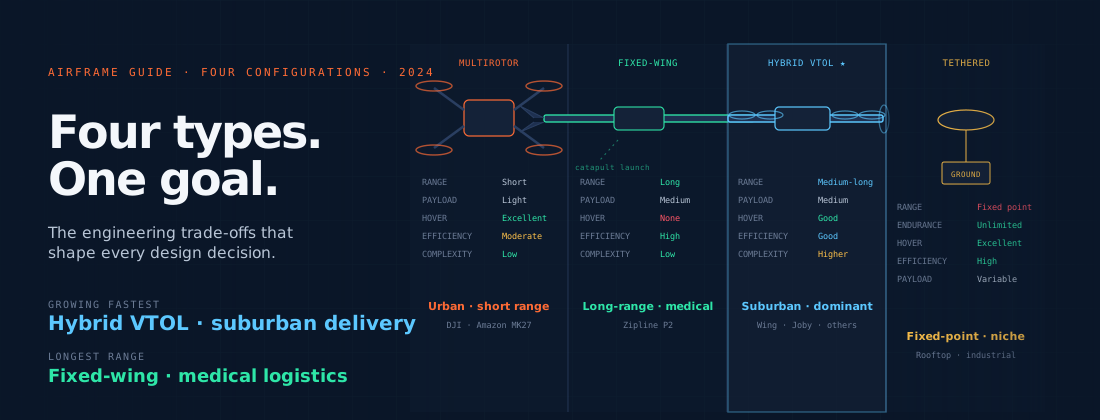
Electric vertical take-off and landing aircraft — typically abbreviated as eVTOL — are aircraft designed primarily for passenger transport in urban and inter-city environments. The category includes a range of designs: multirotor aircraft similar in configuration to large commercial delivery drones but scaled for passenger capacity; tilt-rotor and tilt-wing designs that combine vertical take-off with fixed-wing cruise efficiency; and lift-and-cruise designs that use separate propulsion systems for vertical and forward flight phases.
The companies most prominently associated with eVTOL development — Joby Aviation, Archer Aviation, Vertical Aerospace, Wisk, EHang, Volocopter — are primarily pursuing the passenger air taxi market: aircraft that take off vertically from vertiport infrastructure, fly between urban locations, and land vertically at the destination. The business model is urban air mobility: charging passengers a premium for faster point-to-point transit compared to ground transportation in congested cities.
The certification difference
The most fundamental regulatory difference between eVTOL and commercial delivery drones is the certification pathway. Commercial delivery drones — typically weighing under 25 kilograms — are regulated under small unmanned aircraft frameworks that, while demanding in terms of operational authorisation for BVLOS operations, do not require the type certification process that applies to manned aircraft.
eVTOL passenger aircraft carry people and therefore require type certification equivalent to that required for manned aviation — the same fundamental regulatory standard applied to commercial airliners, albeit with frameworks adapted for novel propulsion and control architectures. The FAA’s Part 23 and special conditions for powered-lift aircraft, EASA’s VTOL technical standards, and similar frameworks in other jurisdictions define the requirements. The type certification process for a passenger eVTOL typically takes five to ten years and costs hundreds of millions of dollars — a qualitatively different regulatory challenge from the operational authorisation process for delivery drones.
The economics are different
Commercial delivery drone economics are driven by delivery volume, hub cost structure, aircraft range, and the price premium customers will pay for faster delivery. The unit of value is a package delivered; the business model is logistics.
eVTOL passenger economics are driven by aircraft purchase price, operating costs, vertiport infrastructure investment, and the willingness of passengers to pay for air taxi service. The unit of value is a passenger trip; the business model is premium urban transport. The capital costs are orders of magnitude higher, the customer acquisition challenge is different, and the regulatory risk — particularly the certification timeline — is substantially greater.
Where the paths converge
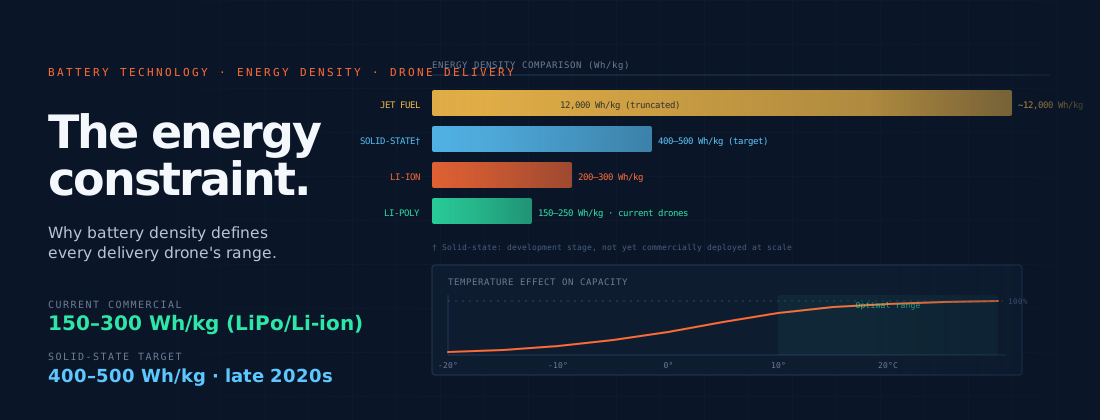
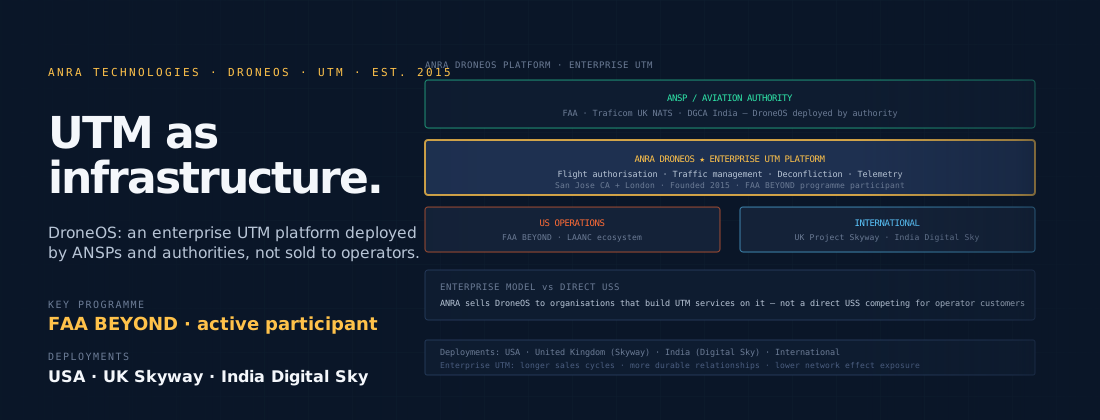
The industries converge at several points that are worth understanding. The battery and electric motor technology development that both sectors depend on is shared — advances in energy density, motor efficiency, and battery management systems benefit both delivery drones and eVTOL aircraft. The airspace management infrastructure — UTM, U-space, vertiport coordination — is relevant to both, and regulatory development in one sector informs the other.
Some companies are pursuing both markets: cargo variants of passenger eVTOL designs exist, and some delivery drone operators have explored larger aircraft with higher payload capacity that approach the smaller end of the eVTOL spectrum. But the primary commercial development in each sector is proceeding on separate tracks, driven by the different economics, certification requirements, and use cases that define each market.
For investors and observers tracking the development of autonomous aviation, understanding the distinction matters. The risks, timelines, and economic dynamics of eVTOL passenger development are substantially different from those of commercial delivery drone operations — and treating them as a single category produces misleading analysis of both.