ANRA Technologies: the UTM software platform built around the BEYOND programme
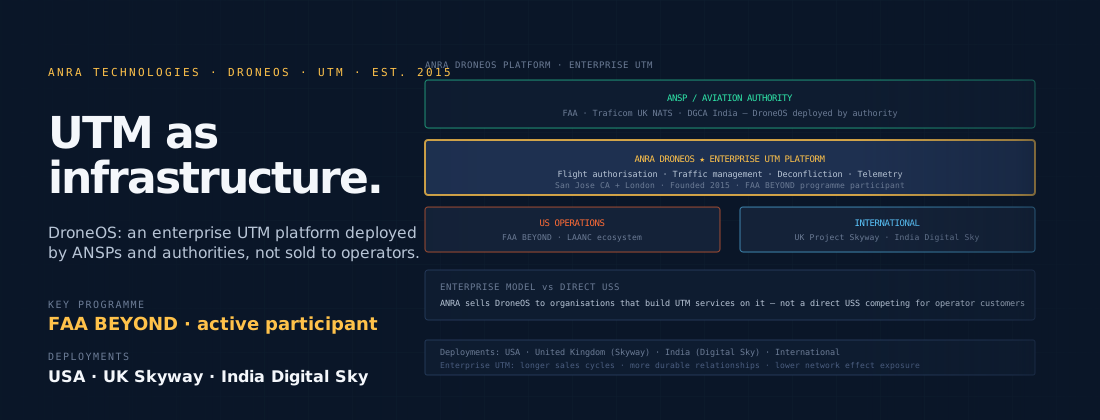
ANRA Technologies was founded in 2015 and has developed the DroneOS platform — a UTM software system designed to manage commercial drone operations in the complex airspace environments that BVLOS delivery requires. The company operates from San Jose, California and London, and has deployed its platform across US and international markets.
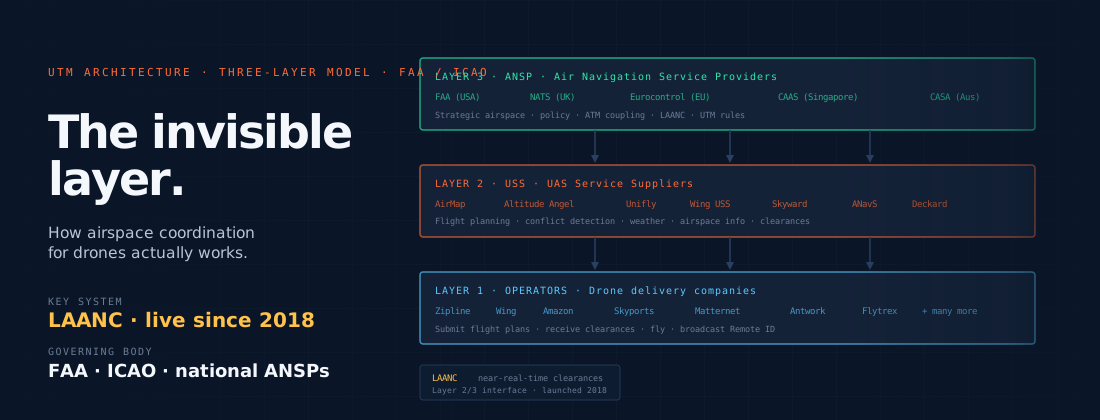
Unlike some UTM providers that offer primarily consumer-facing airspace awareness apps or simple flight authorisation services, ANRA’s DroneOS is positioned as an enterprise UTM platform: software designed to be deployed by ANSPs, aviation authorities, and large-scale commercial operators as the operational management backbone for complex drone operations.
The FAA BEYOND programme participation
ANRA has been a participant in the FAA’s BEYOND programme — the initiative that allowed selected operators and technology providers to conduct expanded BVLOS operations in defined corridors, generating the operational data that supports FAA rulemaking development. The BEYOND programme participation has given ANRA operational experience in the US regulatory environment that is directly relevant to the rulemaking discussions the FAA is conducting, and has produced safety and performance data that informs the technical standards questions that BVLOS rulemaking must address.
Participation in BEYOND has also provided ANRA with the regulatory relationship development that is, in the UTM market, as important as technical capability. An FAA programme participant that has worked directly with FAA technical staff on operational design and safety case development has built regulatory knowledge and relationships that a company with no such engagement cannot replicate from outside.
International deployments
Beyond the US market, ANRA has deployed the DroneOS platform in international contexts including the UK and India. The UK deployment has been relevant to the Project Skyway corridor development that involves multiple participants in building connected airspace infrastructure. The India deployment has engaged with the Digital Sky platform that India’s DGCA has developed as the digital infrastructure for commercial drone operations.
The international deployments reflect ANRA’s positioning as an infrastructure platform provider rather than a direct USS competitor: the company’s customers are the organisations that deploy DroneOS to build UTM services, rather than the drone operators who use those services. This positioning creates a different commercial dynamic from direct USS providers like AirMap or Unifly — broader addressable market but more complex sales cycles and customer relationships.
The enterprise UTM positioning
The UTM market at the enterprise level — where ANSPs, government aviation authorities, and large-scale commercial operators are the customers — is a different market from the consumer-facing USS space where operators access airspace authorisation through apps and APIs. Enterprise UTM customers require deep integration with existing ATC infrastructure, customisation for specific regulatory environments, and the kind of implementation support that a platform company provides rather than a SaaS product.
ANRA’s focus on this enterprise segment positions it differently from the winner-take-most dynamics that may characterise the consumer-facing USS space. Enterprise UTM relationships are more durable — a national ANSP that deploys ANRA’s platform has a high switching cost and a long-term relationship — but the market is smaller and the sales cycles are longer. The competitive position in enterprise UTM depends more on technical credibility, regulatory relationship, and implementation capability than on network effects and authorisation volume.