South Korea’s drone delivery regulatory approach: K-UTM and a progressive domestic market
South Korea’s approach to commercial drone regulation has been shaped by a specific combination of factors: a government actively promoting drone technology as part of broader industrial policy, a domestic drone manufacturing and technology sector that includes both hardware and software companies, advanced telecommunications infrastructure that provides the digital backbone for UTM operations, and a geography — particularly the suburban and rural areas surrounding major urban centres — that suits current-generation delivery drone capabilities.
The regulatory framework
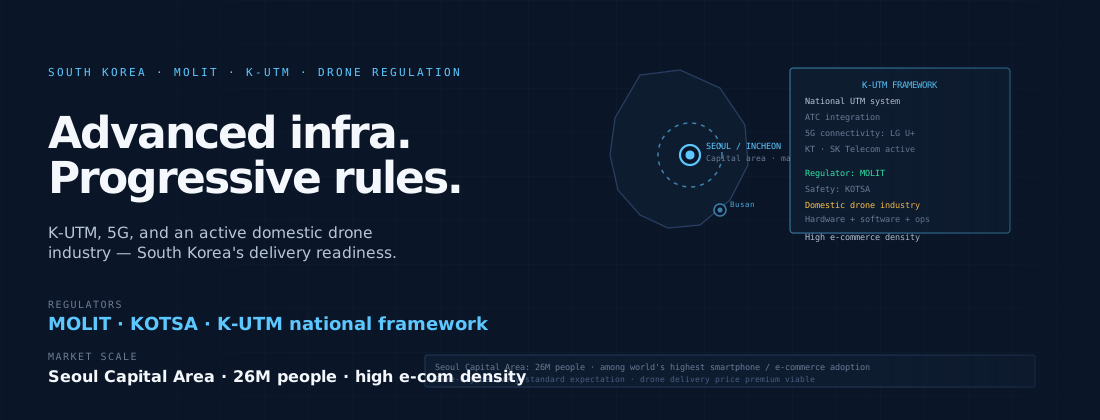
Drone operations in South Korea are governed primarily by the Aviation Safety Act, administered by the Ministry of Land, Infrastructure and Transport — MOLIT. MOLIT has been developing drone-specific regulatory frameworks in parallel with the broader Aviation Safety Act provisions, recognising that commercial drone delivery operations require a more tailored regulatory approach than the provisions designed for manned aviation.
The Korea Transportation Safety Authority — KOTSA — plays a role in drone operator certification and safety standards, complementing MOLIT’s airspace and operational framework functions. The division of regulatory responsibilities reflects the complexity of drone operations, which involve airspace management, vehicle safety, operator competency, and logistics integration in ways that few other regulatory domains do.
K-UTM: the national UTM framework
South Korea has developed a national UTM framework — K-UTM — that provides the digital airspace management infrastructure for commercial drone operations. K-UTM integrates with the existing civil aviation ATC infrastructure managed by the Korea Airports Corporation and provides the flight authorisation, conflict management, and traffic information services that commercial BVLOS operations require.
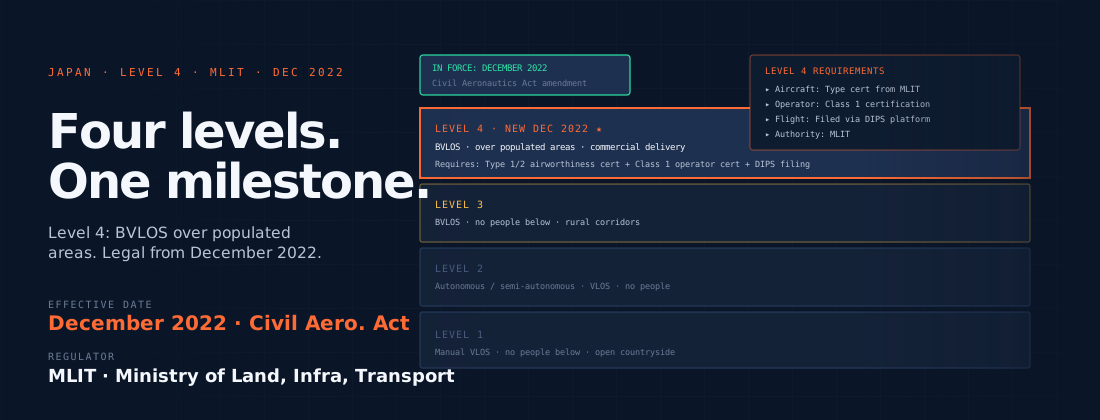
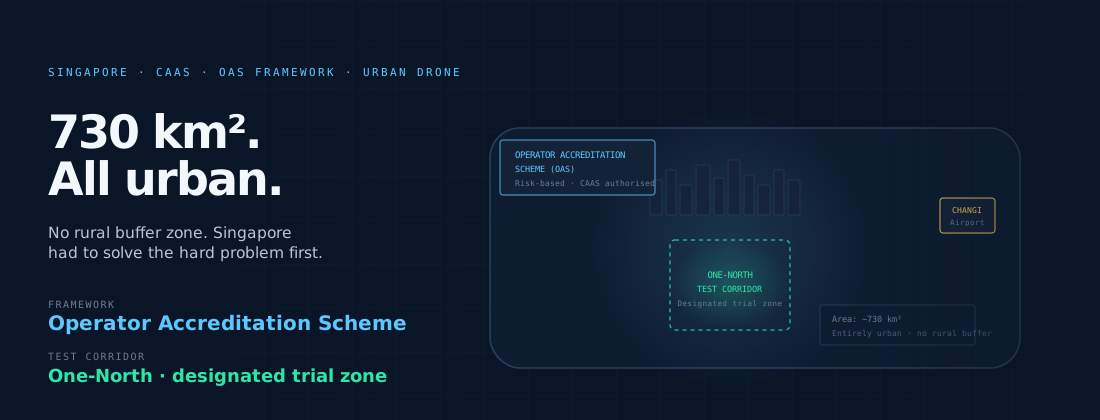
The development of K-UTM reflects South Korea’s approach to drone regulatory development: investing in the infrastructure required for commercial operations in advance of those operations becoming widespread, rather than waiting for operational demand to drive infrastructure development retroactively. This approach — also seen in Singapore’s One-North corridor and Japan’s DIPS platform — accelerates the timeline between regulatory framework development and commercial deployment.
South Korea’s telecommunications industry has been actively engaged in K-UTM development, recognising that cellular connectivity is the primary C2 link infrastructure for most commercial drone delivery operations. LG U+, KT, and SK Telecom have all engaged with drone delivery connectivity as a use case for their 5G networks, providing commercial incentives for low-altitude cellular coverage improvement that complements the regulatory framework development.
The domestic drone industry
South Korea has a domestic drone manufacturing and software industry that has developed in parallel with the regulatory framework. Korean companies are active in drone airframe development, UTM software, and delivery services, providing a domestic industry constituency for progressive regulatory development. The presence of active domestic operators and manufacturers means that regulatory development is informed by real operational requirements rather than being shaped primarily by international operators seeking market access.
The market opportunity
South Korea’s population geography — heavily concentrated in the Seoul Capital Area and in several regional cities, with significant suburban and semi-rural residential development — creates catchment areas for drone delivery that suit current-generation aircraft. The country’s extremely high smartphone adoption, digital commerce penetration, and consumer familiarity with rapid delivery services — same-day and next-day delivery are standard expectations in the Korean e-commerce market — create a consumer base that would readily adopt a faster drone delivery option if the service were available and competitively priced.
The delivery density that the Seoul suburban market could generate, if regulatory authorisation for residential drone delivery were achieved, would be among the highest of any market globally — a characteristic that is directly relevant to the unit economics that determine whether commercial operations can sustain themselves.