The FAA’s BVLOS rulemaking: where the US is on the path to rules-based commercial operations
The United States has the world’s largest commercial drone market and, in the FAA, one of the most complex aviation regulatory environments in which to develop new operational frameworks. The development of rules-based BVLOS authorisation — moving from the current system of individual Part 107 waivers to a framework in which operators can conduct BVLOS operations under defined rules without case-by-case FAA approval — has been one of the most significant regulatory development challenges the FAA has faced in recent years.
The current framework: Part 107 waivers
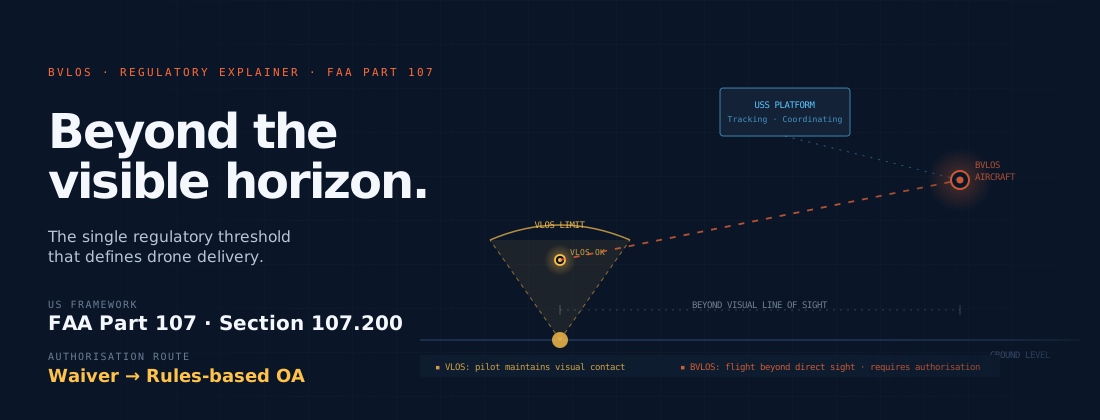
Commercial drone operations in the United States are governed by Part 107 of the Federal Aviation Regulations, which came into force in August 2016. Part 107 established the baseline rules for small unmanned aircraft commercial operations: visual line of sight, daytime, below 400 feet above ground level, below 100 mph, and other operational constraints that define the standard commercial drone operating environment.
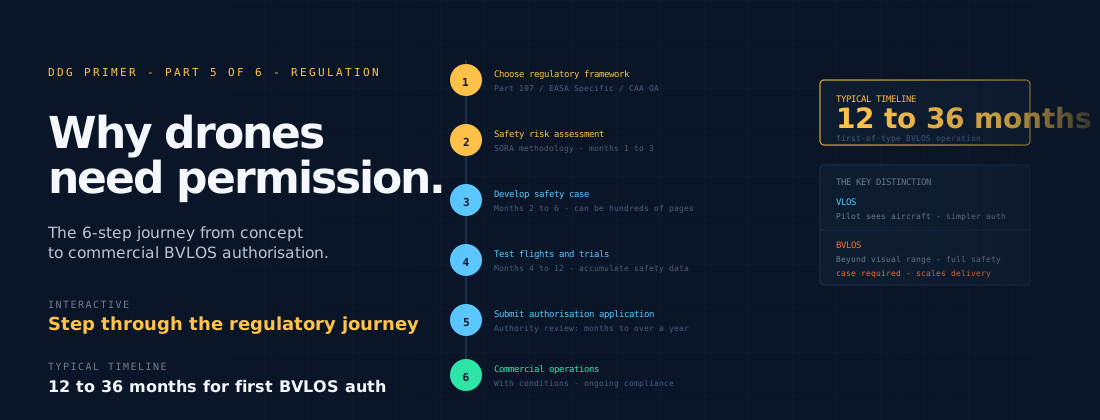
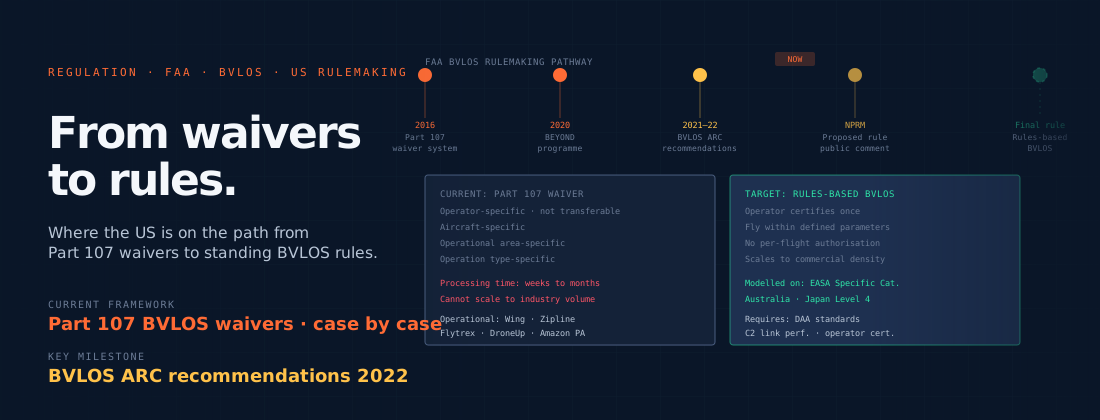
Part 107 also established a waiver process that allows operators to apply for permission to deviate from specific Part 107 requirements, including the VLOS requirement. A Part 107 BVLOS waiver is specific to the operator, the aircraft, the operational area, and the type of operation — it is not transferable and it requires the operator to demonstrate to the FAA’s satisfaction that the proposed operation can be conducted safely without visual observation of the aircraft.
The waiver process has produced a body of authorised BVLOS operations that have generated the safety data the FAA needs to develop rules-based frameworks. Wing, Zipline, Flytrex, DroneUp, and others have operated under BVLOS waivers, and the operational data from those operations has informed the FAA’s understanding of what rules-based BVLOS operations would require.
The BVLOS Aviation Rulemaking Committee
In 2021, the FAA established a BVLOS Aviation Rulemaking Committee — BVLOS ARC — to develop recommendations for a rules-based BVLOS framework. The BVLOS ARC brought together representatives from the drone industry, aviation safety organisations, state and local governments, and public interest groups to develop consensus recommendations on what BVLOS rules should look like.
The BVLOS ARC published its final report in 2022, containing recommendations across the key areas of a rules-based BVLOS framework: performance-based requirements for detect and avoid, C2 link standards, operational risk management methodology, operator certification, and airspace integration. The ARC’s recommendations did not have the force of regulation — they were recommendations to the FAA to consider in developing actual rules — but they established the industry consensus position on many of the technical and operational questions that a BVLOS rulemaking would need to address.
The BEYOND programme
The FAA’s BEYOND programme provided a structured pathway for operators seeking to expand their BVLOS operations beyond what standard Part 107 waivers had allowed. Operating under BEYOND, selected operators conducted expanded BVLOS operations in defined corridors and operational contexts, generating the safety data needed to support rulemaking development. The programme represented an intermediate step between the current waiver-by-waiver approach and a full rules-based framework — a way to accumulate operational evidence at larger scale than individual waivers had produced.
The path to rules-based BVLOS
The development of actual BVLOS rules involves the standard FAA rulemaking process: internal rule development, an Advance Notice of Proposed Rulemaking or Notice of Proposed Rulemaking with public comment, review of comments, and final rule publication. The complexity of BVLOS rulemaking — involving aircraft performance standards, operator certification, airspace integration, and technology requirements that are still evolving — makes it one of the more technically demanding rulemakings the FAA has undertaken.
The FAA operates under resource and timeline constraints that have slowed its rulemaking pace across multiple categories. Aviation reauthorisation legislation, which governs FAA’s mandate and funding, has periodically included provisions directing the FAA to develop BVLOS rules by specific deadlines — reflecting Congressional recognition that the pace of regulatory development has lagged the pace of industry development and the economic opportunity represented by commercial drone operations.
The direction of travel is clear: rules-based BVLOS authorisation, replacing the current waiver system, is the stated goal of both the FAA and the industry. The timeline for achieving it depends on the pace of the rulemaking process, the resolution of key technical questions about performance standards, and the availability of FAA resources to complete the work.